The Users Who Overtook the Machine
A relatively brief, entirely incomplete history of online fashion fandom.
By
Emilia Petrarca
Ten years ago, I graduated from college and landed my dream summer internship at Man Repeller, a blog created by Leandra Medine in 2010, which I read religiously before and after class, along with websites like Style.com and The Cut. At the time, this felt like a big deal. Man Repeller had grown so popular that Medine was able to expand and hire other full-time writers and staff. (And lure a gaggle of eager, unpaid interns every semester.) At 24, she’d just published a bestselling memoir, Man Repeller: Seeking Love. Finding Overalls, and she had so many Instagram followers that when she posted a photo of me in the office one day—yes, an office, and in Soho, no less—my phone crashed from the sudden influx of notifications.
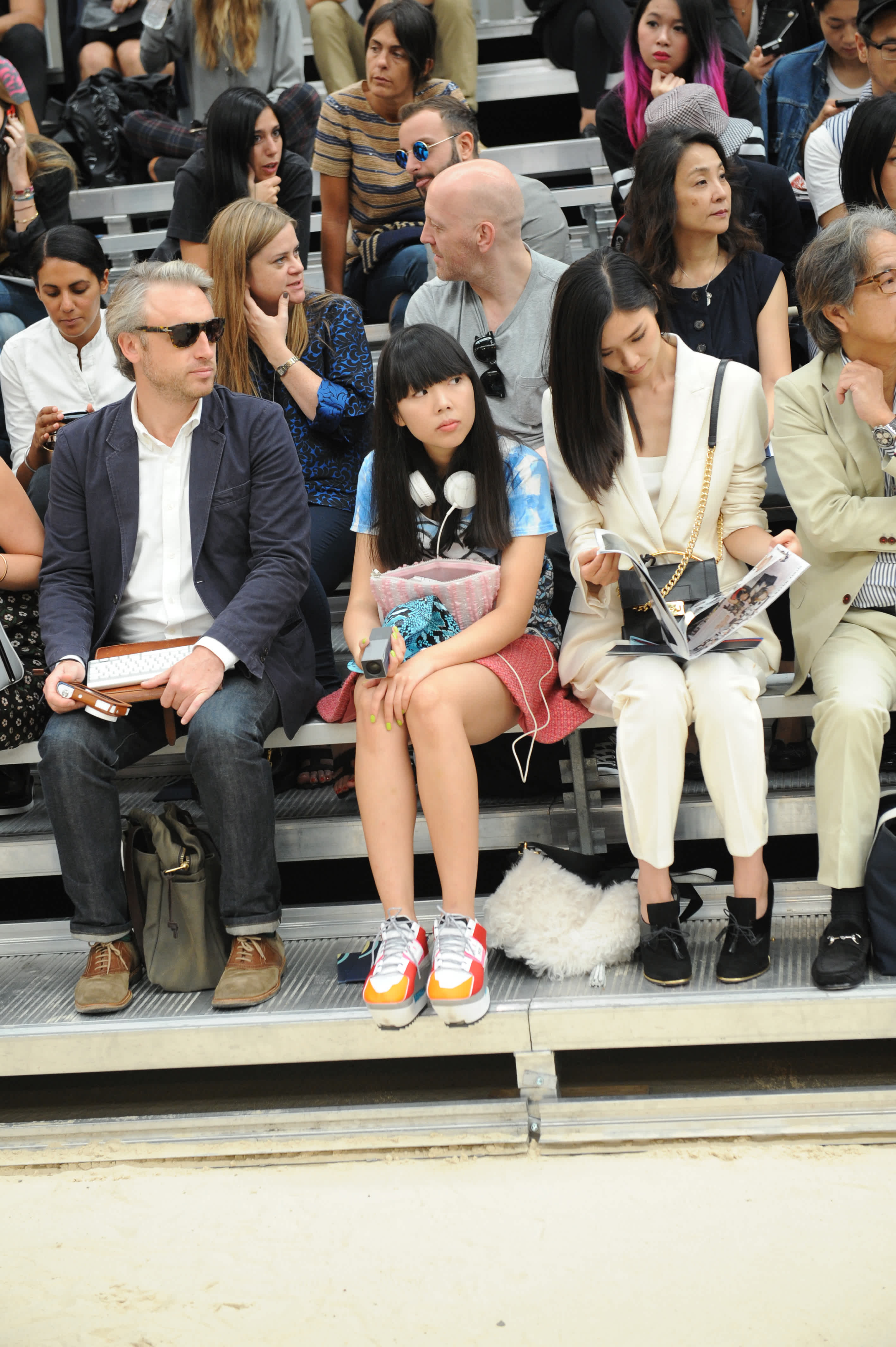
It was, I think it’s safe to say, Peak Blog. Pioneers like Susanna Lau, also known as Susie Bubble, and Bryan Yambao, also known as Bryanboy, had paved the way for those traditionally considered “outsiders” in the industry—i.e., not white, skinny, rich “nepo babies,” or the recipients of flashy degrees (or, in some cases, even legal adults)—to become insiders in their own right. Bloggers like Medine, who had little to no previous professional experience, were attracting a readership that was so widespread and influential—and lucrative—that it forced the establishment to take notice. Compared to print pages, their content felt fresh, friendly, and earnestly obsessed.
Meanwhile, magazines were hanging on to their town cars and expense accounts for dear life. Digital posed a threat to the facade as well as the legacy media members club hierarchy that had been in place for so long. And so, eventually, fashion did what it always does with something shiny, new, and potentially disruptive: It gobbled it right up. Bloggers were offered “real” jobs and print features, sometimes even a cover; brand deals, and front-row seats. “The distance between the Establishment and fashion’s once-dazzling revolutionaries has narrowed, and there is minimal distinction between them,” wrote Robin Givhan in an essay titled “The Golden Era of Fashion Blogging Is Over” for The Cut in 2014, pointing to platforms like Instagram and Twitter for arguably leveling the playing field. “Because what the fashion industry loves, it woos—then swallows whole.”
Work in fashion long enough, though, and you’re sure to see that which has been deemed “over” rise from the dead before you know it. A decade later, pretty much on the dot, the headline of the moment seems to be “Is the Golden Era of Fashion Blogging Back?”
So many of the same characters we saw online in the early 2000s—Medine, but also Garance Doré, Tavi Gevinson, Arabelle Sicardi, Kim France, Michael Williams, Lawrence Schlossman, and others—are writing on Substack in a similarly conversational tone that you couldn’t be blamed for feeling a sense of whiplash. We’re rehashing a lot of the same conversations. Are you selling out if you run ads and use affiliates? Can everyone be a writer? Are you a writer or are you an influencer? And is the latter embarrassing? Will print survive? Who gets to be on top, and have we really made any progress in terms of diversity and inclusion? All valid questions. But is this moment really the same? I’m not so sure. Having gone from working for bloggers to blogging professionally for publications that covered them to starting my own blog of sorts on Substack, I’m feeling a little dizzy.
For one thing, on Substack, we see many former members of the establishment now running in the opposite direction. There’s a different gravitational pull. Market editors, for example, are a dying breed in media, but they’ve found a card-carrying audience elsewhere. There’s no going back because there’s nowhere to go back to. Many of these early bloggers are also older now, with bills to pay and mouths to feed; they’re not teenagers writing purely and naively about what they love from their parent’s basements. That’s not to say they’re capitalist shills or aspiring #girlbosses, either. They just need to make money somehow, and in that way, at least, the cycle repeats itself.
To properly address the question, “Is blogging back?” though, it felt necessary to go back to the beginning. Below is an attempt to follow a line from where it all started to where we are now, speaking to key players along the way to fill in the blanks. The result is a brief, relatively incomplete history of online fashion fandom. It’s also a picture of how we’ve always been, and perhaps forever will be, at the mercy of constantly evolving technology. New platforms emerge, and for better or worse, they allow for new voices to be heard—and new ways to make money. Were online fashion stans—the Youtubers and the TikTokers and the meme-makers and the Twitterati—the ones who ousted Virginie Viard from Chanel this summer? Maybe. The answer’s not “No,” which would have been unthinkable ten years ago. Fashion fans have arguably never been more powerful. They overtook the machine. But they’re also arguably still stuck inside it, trying to blog and post their way through it but never quite out.
The Forums and Style.com
2000
Style.com launches as the online home for Vogue and W.
“Before Style.com, fashion was pretty much a closed system,” says Dirk Standen, a British-born, New York–based writer and editor who became editor-in-chief of Style.com in 2005 and Men.style.com, which he helped launch. “Editors, retailers, and a few other insiders would be invited to the shows, but that was really it. It would take weeks or months for that information to filter out to the public [via magazines]. When Style.com came along, everyone could see every image from basically every show in real time. I think that leveled the playing field and helped to create this new audience of fashion fans. And then a lot of people who grew up with Style.com went on to express their own points of view through new platforms like blogs and social media.”
2001
TheFashionSpot, an online community for the “fashion obsessed,” launches. Because most magazines don’t have a digital presence yet, entire issues were uploaded by users to be viewed and dissected online.
“I learned about fashion on TheFashionSpot and by digging deep into forums,” says Susanna ‘Susie’ Lau, now 40, who was studying at University College London at the time. “Because I didn’t go to fashion school, it was like my dirty little secret on the side of studying history. TheFashionSpot catered to everybody; it felt like there was a place for every [style] tribe to hang out and learn about different aesthetics. There was also a thread called “What Are You Wearing Today?” It was so lo-fi, but it was the predecessor to mirror selfies. People would take pictures of themselves with a little digital camera in the mirror. Commenting and posting there gave me the confidence to do it on a more expanded level on a blog.”
Superfuture and Styleforum are two other popular forums around this time, specifically for menswear enthusiasts.
The Rise and Fall of Bloggers
2003
Google acquires Blogger, also known as Blogspot, a free online platform allowing users to create and manage their own blogs. Typepad, a similar platform, also launches.
After graduating from Yale with a degree in public health, Kathryn Finney starts writing The Budget Fashionista as a hobby on Blogger. Eleven years later, she will become one of the first Black women to sell her website and media company for a profit.
2004
Stylediary.net launches, allowing users to upload photos of their daily outfits. At its peak, it attracts around 30,000 users—including Lau.
While living at his parent’s house in the Philippines and working as a web developer, 24-year-old Bryan Yambao launches Bryanboy. He gains a following for posting candidly about his life, his travels, and his love of fashion, as well as for his caricature of a, in his words, “new-moneyed classless bitch from hell.”
2005
Diane Pernet, a writer in her late-50s who often wears all-black, launches a blog called A Shaded View of Fashion.
Scott Schuman, a photographer in his mid-30s from Indiana, launches his street-style blog, The Sartorialist. He soon becomes a contributor to Style.com.
“It seems really hard to imagine now, but it was actually considered somewhat revolutionary and even controversial for a Condé Nast publication to collaborate with a ‘blogger’ at the time when we first started working with Scott,” says Standen. “People didn’t quite understand, but obviously, it was hugely successful. I remember when Scott had an exhibition at the Danziger Gallery in West Chelsea [in 2007]… There were lines around the block for the opening night—and Chelsea has big, long blocks. It was definitely one of the moments when I realized how powerful bloggers had become.”
Tommy Ton, a 20-something-year-old photographer based in Toronto, launches a local lifestyle publication called Jak & Jil, which will later become a hugely popular street-style blog.
[I was inspired by] the authenticity of it all,” he says. “No one was being paid to promote any product or brand; everyone was genuinely just their authentic self. Of course, those who still work in the industry dress themselves, but it's been overtaken by the virality of fashion. Why I wanted to photograph it was because it felt so different from the type of fashion I was used to seeing in magazines and on television. It was an accessible type of glamour. It felt very desirable and aspirational and I wanted to know more about the characters behind the scenes.”
The New York Times covers fashion blogs and bloggers for the first time, citing publications with names like Blogdorf Goodman, I Am Fashion, Shoewawa, Now Smell This, Fashion Addict Diary, and Closet Therapy. “They may be a long way from displacing Vogue as a fashion authority, but they are steadily gaining clout with consumers and marketers,” writes Ruth La Ferla.
2006
Lau launches her own blog called Style Bubble at the age of 22 from London, where she worked in advertising.
“I loved those early days, especially going to fashion week, where there were just a few bloggers hanging out,” she says. “It just felt really friendly and really positive. Everyone commented on each other’s blogs to show solidarity and made sure to keep up with everyone’s posts.”
Garance Doré, a freelance illustrator living in Paris, launches her eponymous blog at the age of 31.
Twitter launches.
Julie Fredrickson, the editor-in-chief of Coutorture.com, makes headlines for asking Anna Wintour if she can get a video interview at Costello Tagliapietra's SS07 Fashion Week show in Bryant Park. Later, she says the publicist Kelly Cutrone went “apocalyptic,” telling her to get away from Wintour “immediately.”
Phil Oh, while working at a startup, launches his street-style photography blog called Street Peeper at the age of 26 because he thinks it will be a “good excuse to travel a lot—and party.”
“At the time, I thought, ‘Oh, there are already three street-style blogs—that’s so many,’” says Oh now. “‘Would it be really corny if I started a fourth one? Because, Jesus, it’s already so saturated.’”
Meanwhile, Beka Gvishiani, a teenager living in Tbilisi, Georgia, finally gets high-speed internet. After picking up his first Vogue magazine at a newsstand, he Googles the title and finds TheFashionSpot.
“I applied for the membership because I saw that they were talking about magazines as though they were scientific solutions,” he says now, at the age of 33. “Or something super, super important to them. A good cover would be a huge celebration, and a bad cover would be the end of the world.” A few months later, he’s accepted. He’s able to find magazine covers and editorials online before others, which gives him an edge. “I have an addiction to breaking news,” he says. Soon, he becomes a main contributor, posting some 20,000 times over the course of four or five years. “I was also learning English through it,” he adds. “I picked up specific wording, or fashion slang, and abbreviations.”
2007
Imran Amed launches a personal blog called the Business of Fashion on Typepad as a 30-something-year-old marketing consultant at McKinsey.
Tumblr launches.
Elin Kling, a 24-year-old Swedish newspaper editor, launches Styled by Kling, becoming the most-followed blogger in Sweden in two days. She will later cofound a brand called TOTEME.
Michael Williams, a 30-something-year-old writer and marketer from Ohio, launches A Continuous Lean, a menswear blog focusing on American craftsmanship, heritage brands, and classic style.
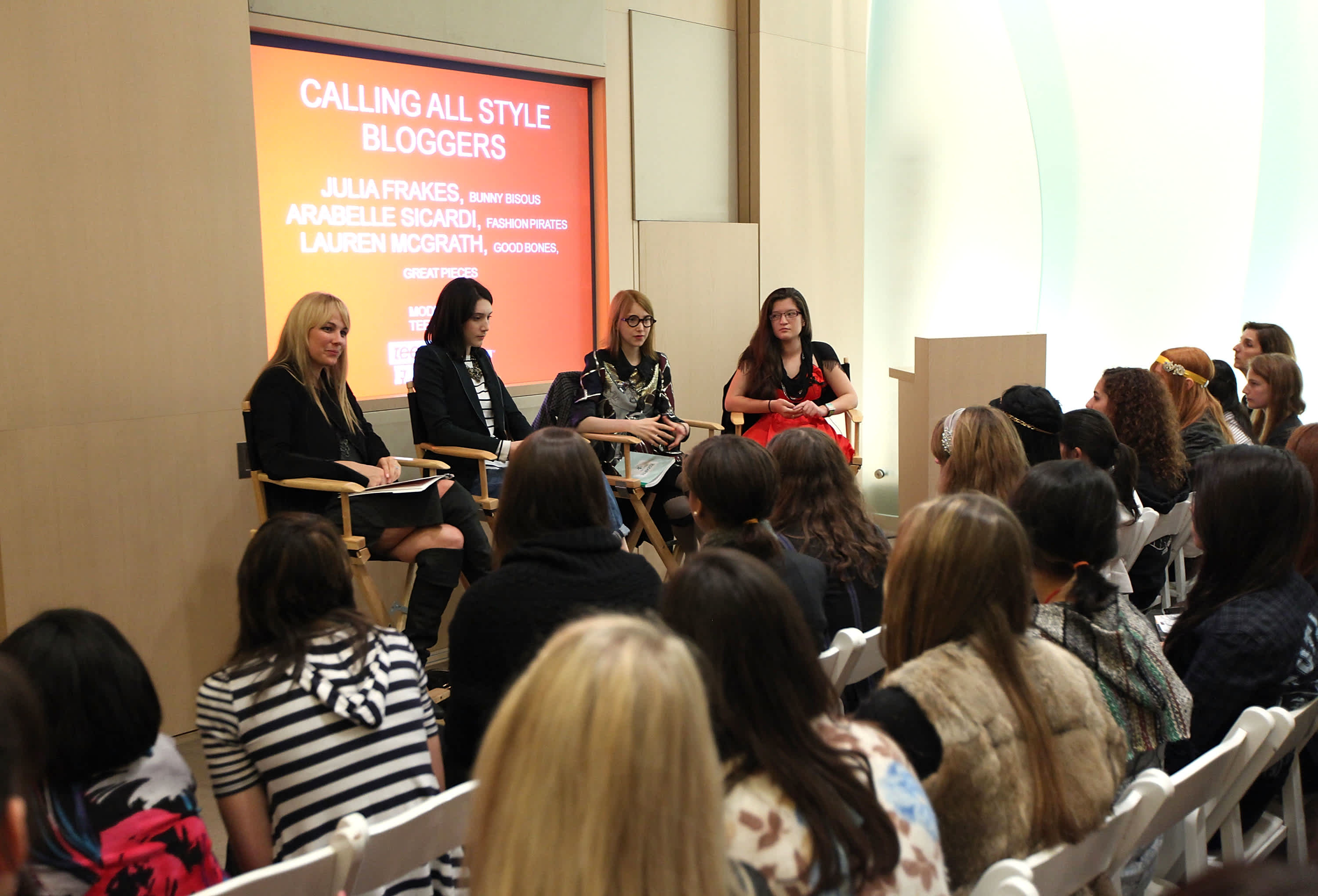
Arabelle Sicardi launches a blog called Fashion Pirate as a 14-year-old living in New York City.
“I could not shut the fuck up about what my internet friends were wearing to my friends in real life,” they say now, at the age of 31. “So they basically were like, ‘You should just start your own blog because we don't want to hear about it anymore.’”
2008
Marc Jacobs names a Louis Vuitton handbag after Bryanboy posted about it on his blog, calling it the BB Ostrich bag. By this point, the blogger has his own signature pose, which is meant to highlight accessories like designer bags.
Tavi Gevinson launches her blog Style Rookie as an 11-year-old living in the suburbs of Chicago. Some members of the press question whether or not her parents are ghostwriting it. (They are not.) Meanwhile, Sicardi puts Style Rookie on a list of top seven “brilliant blogs,” writing: “If we weren’t already married I’d move to Chicago and adopt her as my little sister. True story. Is my rabid fangirlism bothering you yet?”
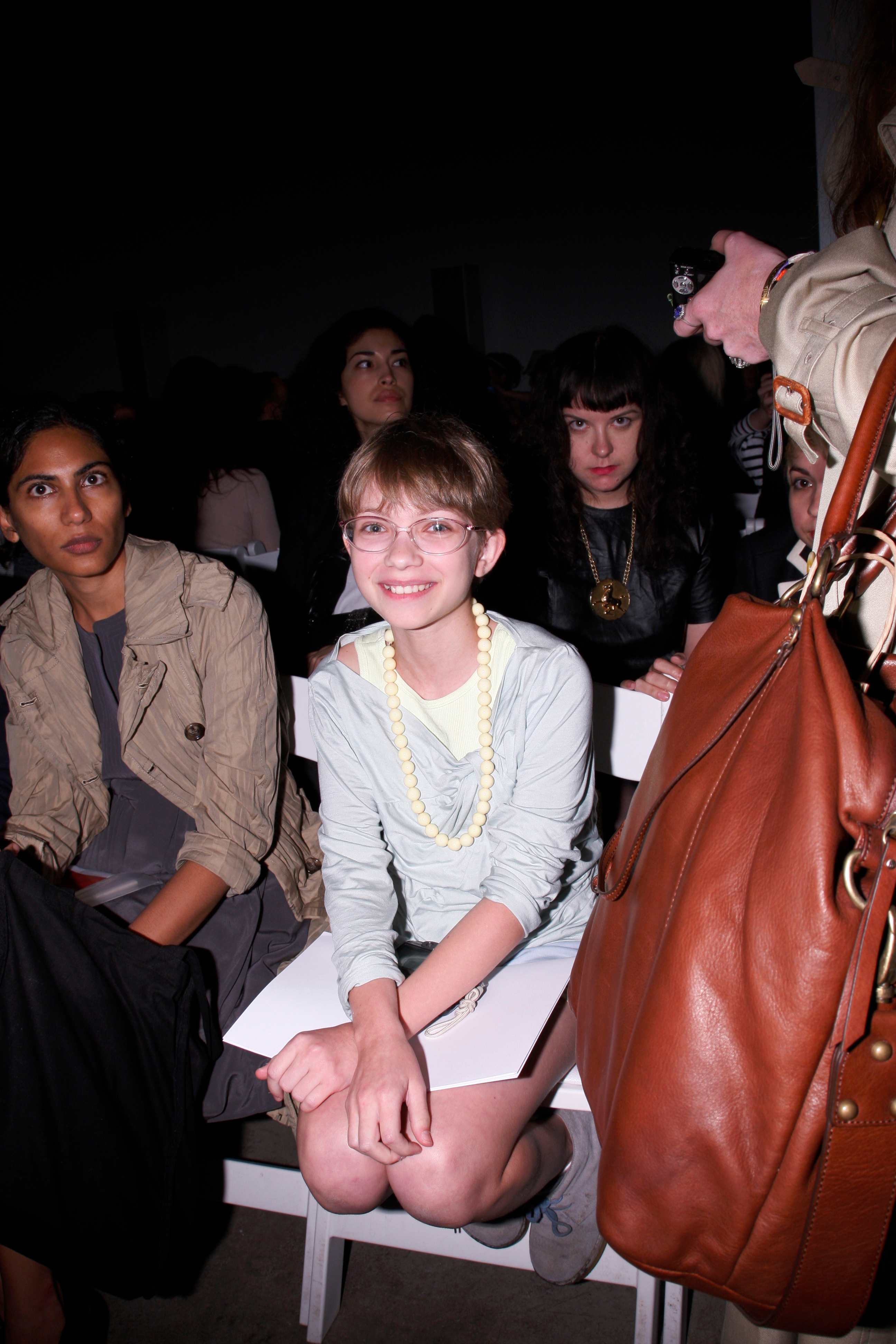
Elizabeth Spiridakis Olson, an art director at T Magazine and author of the blog White Lightning, writes about Tavi and the “next generation” of style bloggers for the magazine. “Whereas a decade ago, suburban girls with a craving for fashion daydreamed via the pages of Vogue, today’s budding fashionista has access to a world of sick looks on her laptop.”
It’s reported that Doré and Schuman are dating.
2009
Ton starts photographing street style for Style.com.
Teen Vogue features Sicardi in an article about young bloggers alongside Jane Aldridge, a 16-year-old living in Texas who writes a blog called Sea of Shoes, Karla Deras, the 19-year-old author of Karla’s Closet, and Rumi Neely, 24, who started Fashion Toast.
Lawrence Schlossman, a 22-year-old working in for-profit education and living in Charlotte, North Carolina, launches Sartorially Inclined, a menswear blog on Blogspot.
“I was not a member of the forums,” he says now, at the age of 37. “They can be hard to break into as a new person. There are caste systems and pecking orders and hierarchies; it’s very much a lunch table type vibe, where once you break in and you’ve been indoctrinated, I can be an amazing community and resource. But I was like, ‘I’m good on that.’ I jumped into the growing blog community instead. I was lucky enough that my blog gained some traction, and I built an audience. I was living and working in North Carolina at the time—just a standard white-collar job—and I would fly back home and stay with my parents in New Jersey so I could go to the trade shows that were happening at the time in New York City.”
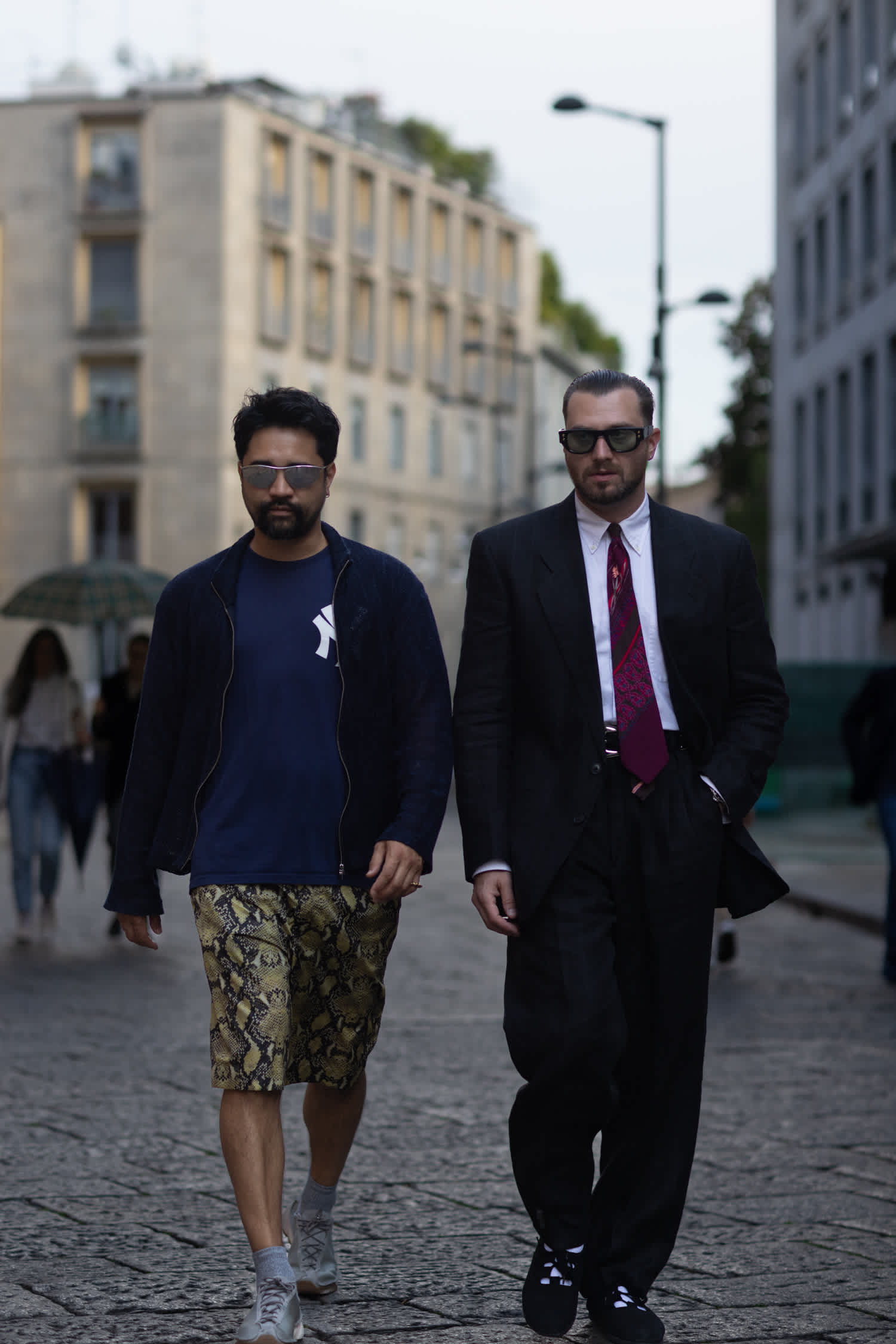
Gevinson covers Pop’s fall issue at the age of 13. The British magazine’s then-editor-in-chief, Dasha Zhukova, invites her to create a zine insert with a handful of other bloggers. Gevinson asks Laia Garcia-Furtado of Geometric Sleep, plus the creator of Fake Karl Lagerfeld and Spiridakis Olson, to help her.
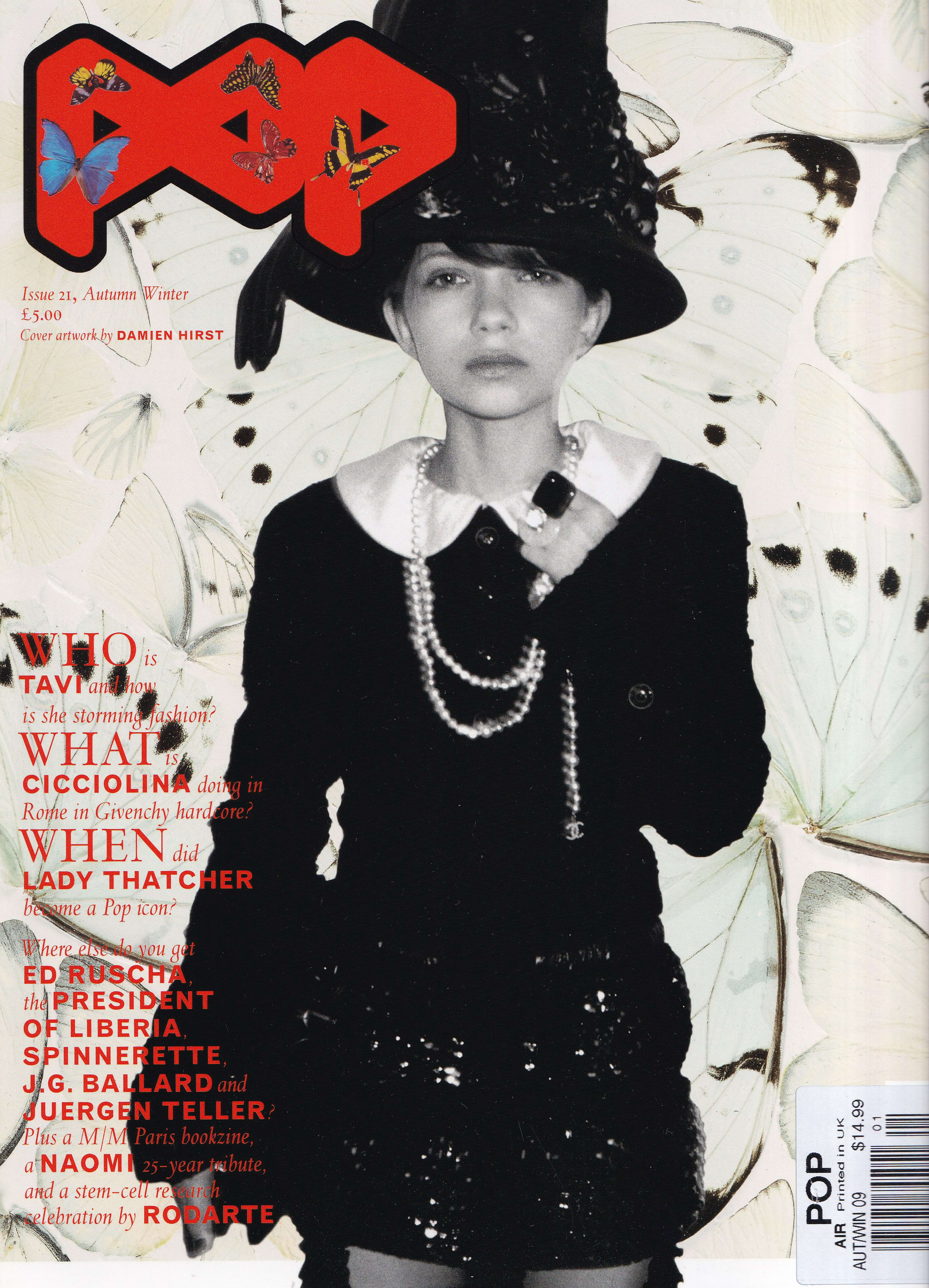
Above: Pop magazine fall 2009 cover featuring Tavi Gevinson with cover artwork by Damien Hirst.
Relive Gevinson and Garcia-Furtado’s highs and lows of cross-Atlantic flights and partying with Richard Prince and Björk HERE.
The Federal Trade Commission requires bloggers and other online content creators to disclose any material connections they have with brands or companies when promoting or endorsing products or services.
Gevinson writes a column for the January issue of Harper’s Bazaar about the spring collections, making her the youngest reporter ever to appear in the pages of the magazine, according to then-editor-in-chief Kristina O’Neill, who met Gevinson at a Marc Jacobs show earlier that year.
Anne Slowey, a senior editor at ELLE, tells The Cut that the move “feels a bit gimmicky.” Meanwhile, the Huffington Post’s longtime contributing style editor Lesley M. M. Blume thinks Gevinson is a novelty. “She will be a story for a while and it will either die out, and she’ll fade away, or she’ll become a fashion editor,” she tells reporter Amy Odell, who now writes a popular fashion Substack called Back Row. “She might not be so sweet and precocious in a few years after being inundated with this kind of press. Worst-case scenario she ends up overwhelmed and messed up, but no one can predict that.”
Dolce & Gabbana fills its front row with bloggers, including Bryanboy, Doré, Ton, and Schuman. Bryanboy is seated two positions to the right of Wintour. “Do I think, as a publicist, that I now have to have my eye on some kid who’s writing a blog in Oklahoma as much as I do on an editor from Vogue? Absolutely,” Cutrone tells the Times, changing her tune. “Because once they write something on the internet, it’s never coming down. And it’s the first thing a designer is going to see.”
But you may be wondering, Where was Lau? “I said ‘no,’ because I couldn’t get the time off work,” she explains. “When it happened, it sent the media into overdrive or an existential crisis of, Are bloggers gonna kill print? It started all these think pieces, which now seem kind of ridiculous, about this blogger-versus-print narrative. There were definitely editors who were very, very sniffy and snobby about bloggers and the whole self-publishing universe and didn’t want anything to do with them. They were very sniffy about websites in general. The idea of exposing fashion online or putting up an editorial online was the antithesis of what they wanted in their professional eyes. But I also think the media stirred up a bit more than what was actually happening in reality.”
2010
Vogue features Ton, Bryanboy, and Doré in its March “Power” issue, alongside Catherine Kallon, founder of Redcarpet-fashionawards.com, Mary Tomer, who started a blog about Michelle Obama’s style, Michelle Phan, a beauty YouTuber, the photographer and illustrator Todd Selby, and the blogger and model Hanneli Mustaparta. “Blogging can command a profile in the fashion world, bringing a certain kind of power and privilege,” declares Mark Holgate, fashion news director at Condé Nast.
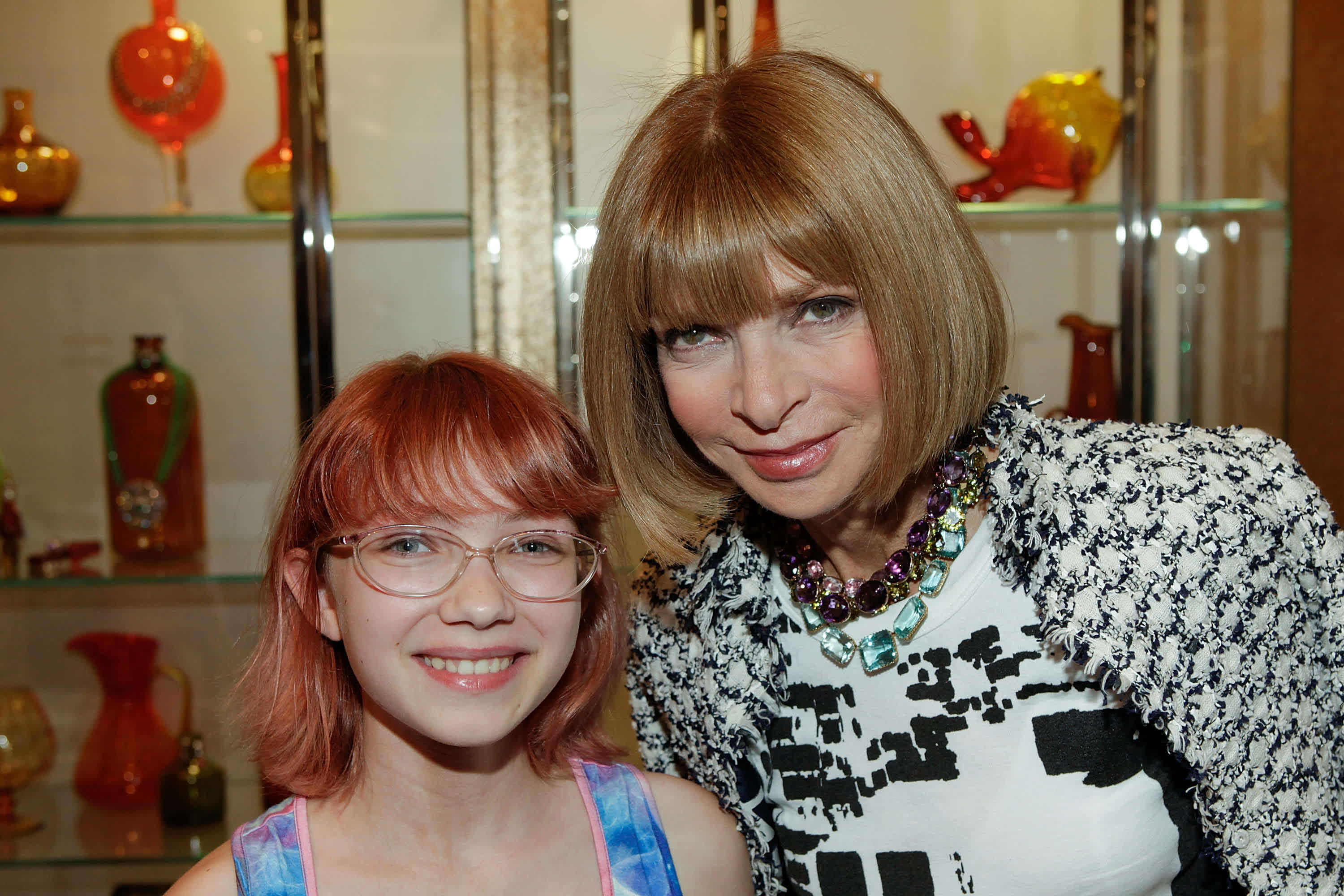
Gevinson wears a large bow-shaped hat by Stephen Jones to Couture Week in Paris. A disgruntled Grazia editor seated behind her at the Dior show fires off a tweet from the second row: “At Dior. Not best pleased to be watching couture through 13 year old Tavi's hat.”
Leandra Medine starts a blog called Man Repeller at the age of 21 while studying journalism at New York University.
Emily Weiss, a 25-year-old former assistant at Vogue, starts Into the Gloss, a beauty website.
Gevinson gets a New Yorker profile, in which she is likened to a “Buddhist child deity.”
Vogue finally launches its own website, Vogue.com.
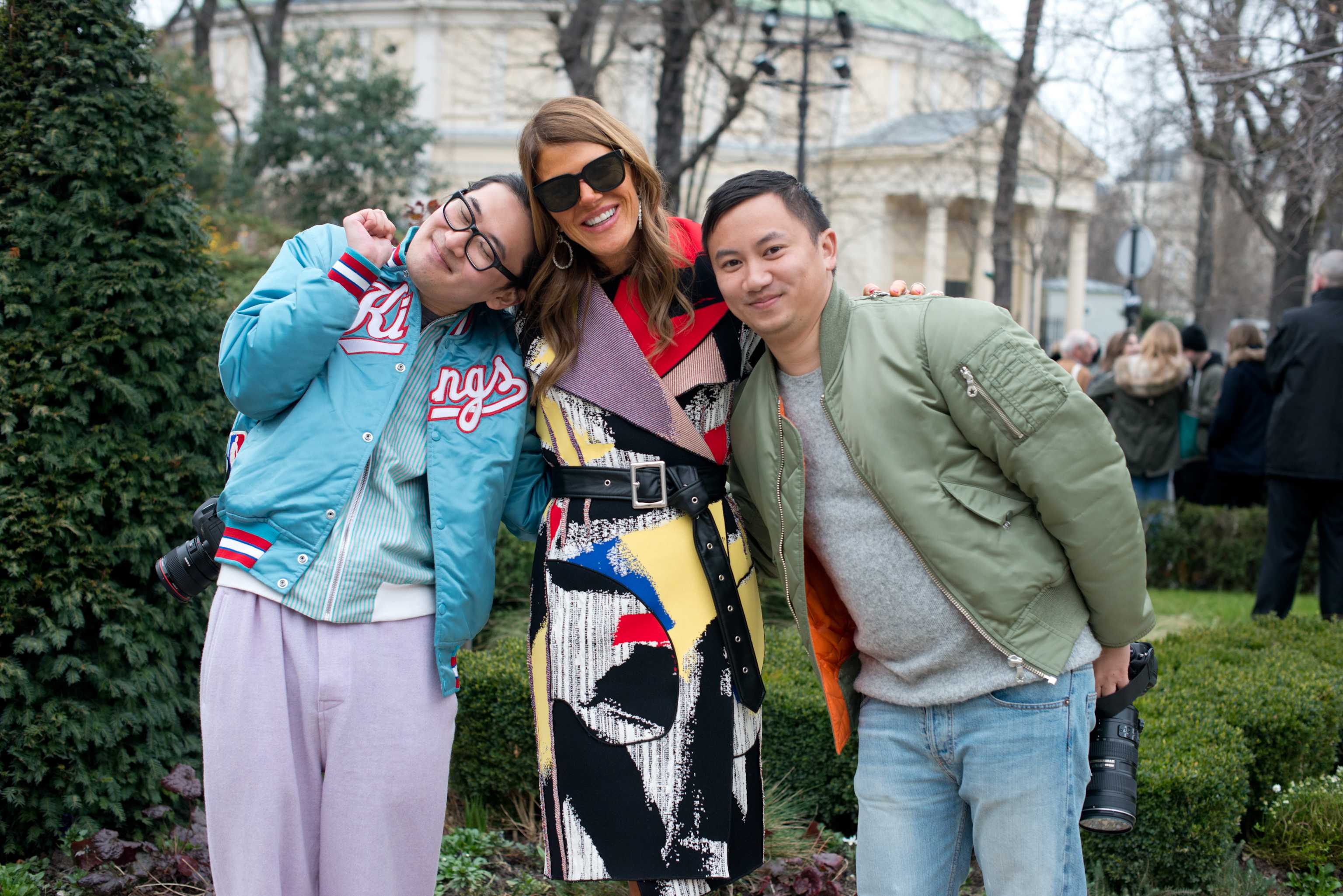
Oh is hired by Vogue as a street-style photographer.
“All of a sudden, everybody was so much nicer to me,” he says. “I would send requests to PRs like, ‘Hi, my name is Phil. I have this blog, blah, blah, blah. Every season, a few more ‘nos’ would turn into standing invites. And then a few more standing invites would turn into, ‘We’d love to have you, please come.’”
Instagram launches.
José Criales-Unzueta, a teenager living in La Paz, Bolivia, joins Tumblr. There, he starts following future fashion designer Peter Do, not knowing that he will one day be reviewing his eponymous brand’s collections as a writer for Vogue Runway.
“I was super chubby and very nerdy,” he says now, at age 29. “I didn’t have anyone to talk about fashion with, and I was also in the closet. The idea of being open in any way was very scary to me, and that’s why the internet became so important to me. I was like, oh my God, I can be whatever I want on Tumblr, and no one will ever know.”
Schlossman, Gvishiani, Russell, and Sicardi also join Tumblr. As does Dara, who is now the fashion director of Interview magazine.
“Tumblr wasn’t just a mood board for menswear; it was also great for its Q&A feature,” says Schlossman. “It was like recommendation culture now where people would be like, ‘How does this brand of shoes fit?’ Or, ‘What do I wear to a wedding?’”
2011
Kling cofounds NowManifest, a fashion blog aggregator platform.
Blogger Amber Venz launches RewardStyle, an invitation-only platform that allows bloggers to earn a commission every time a reader clicks on one of their hyperlinks and buys something.
Gevinson launches Rookie magazine.
“We were all very, very close,” says Sicardi, who joined as a contributing writer in 2012. “We went to each other’s houses for birthdays. We swapped clothes. We were more of a sisterhood.”
Complex Media launches Four Pins, a menswear blog geared toward a younger audience that offers a more humorous take on fashion and streetwear.
2012
The Times writes a story about male fashion bloggers featuring Schlossman, Williams, and others. “NOT every fashion blogger is a 15-year-old girl with an unhealthy obsession with Rei Kawakubo,” says author Alexis Swerdloff. “Some are older. And some are men.”
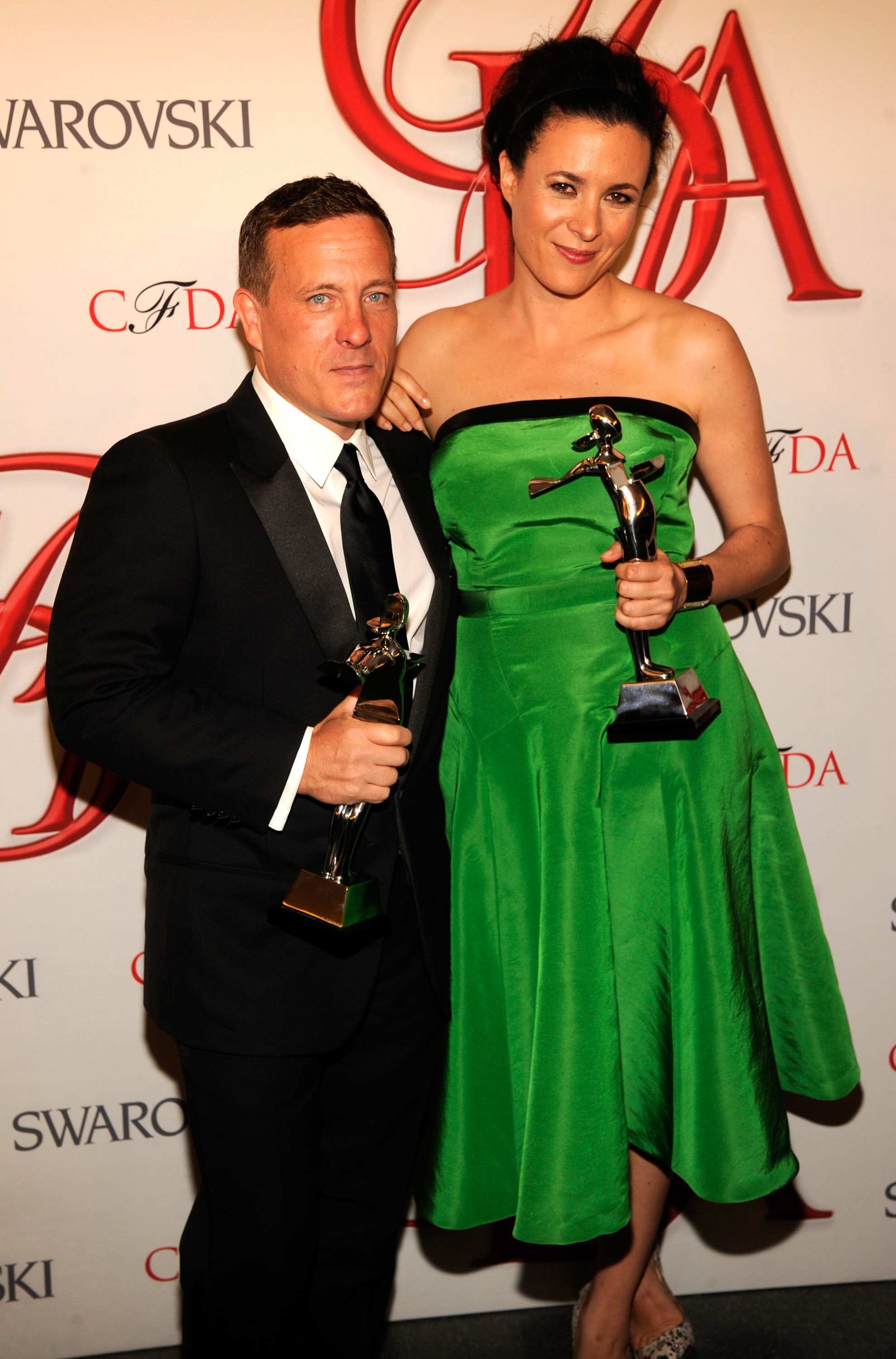
Kim France, who was fired from Lucky magazine in 2010 after serving as its founding editor for over a decade, launches her own blog, Girls of a Certain Age, aimed at women over 40.
“For me, it was really great because when I was the editor-in-chief of a magazine, if I thought a designer's clothes were poorly made for how expensive they were, I couldn’t just say that,” she says.
Schlossman is named editor-in-chief of Four Pins, following founding editor Noah Johnson, who is currently the global style director at GQ.
“At this point, I was able to get real jobs in this industry based on my digital footprint with blogging and writing and the audience I’d established,” Schlossman says.
He soon asks Rachel Tashjian Wise, who at the time had her own blog called Pizza Rulez and is now a fashion writer for the Washington Post, to start writing for the site.
“The unfortunate truth is that it is often easier to break through with an original point of view writing about menswear,” she says. “Robin [Givhan] started as a menswear writer, for example. Maybe that's true in a broader sense—the streetwear-slash-drop models of fashion come from men’s, as do many of the past decade’s most important designers, like Raf Simons and Virgil. Part of that is that they never ask anyone to fit into a box; too often in women’s, we want people to fill a certain role. I think the Four Pins guys would just find people they liked and let them rip. I was the first woman writer on the site and there was nothing old-school Esquire lad mag pinup about me or my writing, and I thought it was really cool that Lawrence thought of me. I liked writing provocative pieces—you know, ‘takes’—how Suzy Menkes’s anti-blogger story was awesome even though I was a blogger; how New York Fashion Week was filled with too many wannabes; why men shouldn’t take selfies—I think I argued that vanity is the province of women, and I think I still agree with that. I wrote a story about how I stood in line for the first sacai x Nike drop and could finally relate to hypebeasts. The idea was to be really funny and savvy about brands and music. Self-deprecation was key. I always felt like we were telling guys it was OK to care about clothes, and that if you could adapt this voice or point of view, that made you part of a community.”
Condé Nast buys NowManifest, bringing Anna Dello Russo, Bryanboy, and Lau on board as contributors.
2013
Suzy Menkes writes about the “Circus of Fashion” happening outside shows, speaking about street style.
“All of a sudden, all these people that used to come out wearing their best Nicolas Ghesquière Balenciaga and all their fun Proenza Schouler started dressing down because they felt ashamed by this article,” says Oh. “You know the saying, ‘The tallest blade of grass is the first to be cut?’ People didn’t want to seem like they were peacocking, and then we saw the rise of normcore.”
Patreon launches as a way for creators to monetize their content.
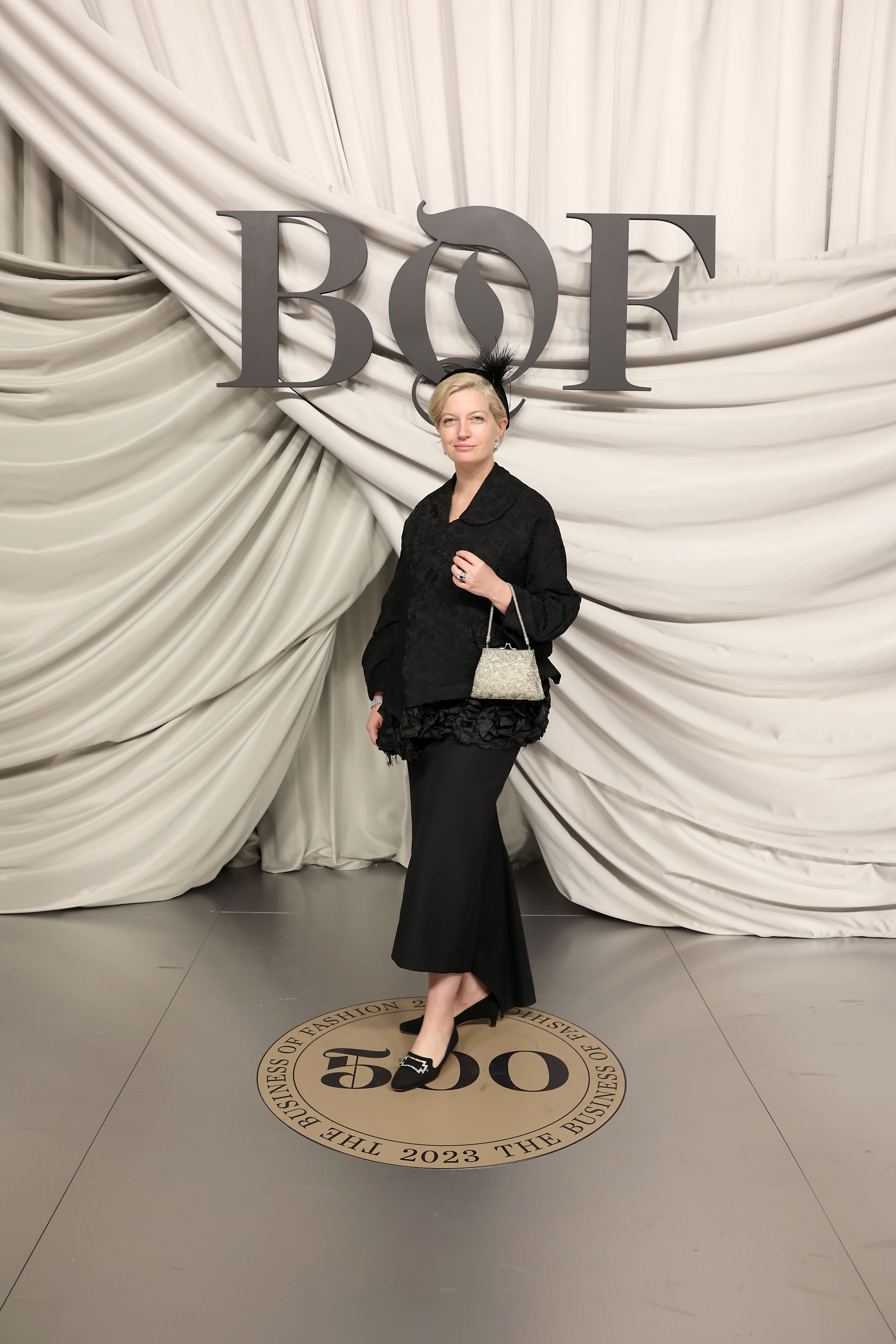
BoF, which at this point is a bonafide website, launches the BoF 500. Standen, Lau, Yambao, Pernet, Schuman, Ton, Doré, and Medine are all on it. Many others mentioned in this timeline will also be honored at a later date, including Tashjian.
Man Repeller relaunches as a content platform with staff, rather than a personal-style blog about Medine alone.
2014
Givhan declares “The Golden Era of Fashion Blogging Is Over” in an essay for The Cut. “The distance between the Establishment and fashion’s once-dazzling revolutionaries has narrowed, and there is minimal distinction between them,” she writes. “Because what the fashion industry loves, it woos—then swallows whole.”

Sicardi starts writing a beauty advice column for Teen Vogue and working as a beauty assistant.
Doré and Schuman break up.
Weiss launches Glossier.
@dietprada shares its first post on Instagram.
2015
Condé Nast shutters NowManifest and, more devastatingly, folds Style.com into Vogue Runway soon thereafter as part of a strategic decision to consolidate and focus on its main titles. Later, the URL will be repurposed in a failed e-commerce attempt with Farfetch.
“I think there was something very pure about Style.com,” says Standen. “‘See fashion first’ was the official motto, but our internal motto was, ‘For fashion obsessives, by fashion obsessives.’ It was a shared passion. We were also a relatively small, very tight operation. In those days, there weren’t the kind of clickbait imperatives that became part of the internet, for better or worse. When Style.com was in its heyday, it was before the idea that everyone had to be chasing the exact same story, and posting about whatever topic was trending. It was a destination, and people spent time there. They didn’t click on one story and never return. Our audience was built on people who came obsessively, all the time. I don’t know if Style.com could have maintained that way. The only way would have been by becoming a subscription site, and I think probably was a loyal enough audience that that might have worked. But obviously, that’s not easy to maintain, either. It was at its peak when it ended, so people have a good feeling about it.”
The Commentators Rise From the Ashes
2015
Kim Russell, a teenager living in Perth, Australia, starts posting outfits on Polyvore, a social commerce website where users can create and share collages or “sets” of fashion items, interior designs, and other products, and gains a following. She posts her Polyvore looks on Instagram as @kimberlythestylist and gains a following there as well. She also starts sharing fashion commentary and history on Twitter as @thekimbino.
“I always had a desire to work in fashion, but it’s one of those really far-fetched careers, especially as someone who didn’t properly study at a school like Central Saint Martins or Parsons—you don’t really know the avenue you can take,” she says now, at the age of 28. “Where I’m from is one of the furthest cities from any other city in the world. So we weren’t that up to date on magazines and traditional forms of fashion media.”
During his freshman year of college at the Fashion Institute of Technology, Luke Meagher launches a YouTube channel called HauteLeMode. Before that, the native Staten Islander had a blog of the same name where he posted street-style photos, which he took walking from Xavier, his high school on Sixteenth Street, to the Staten Island Ferry. Bryanboy was a frequent subject. Both are active on so-called high-fashion Twitter, a corner of the platform populated by young fashion fans celebrating work that was made long before they were born.
“If hypebeast twitter is driven by the machismo jawnz-copping-swashbuckling meme-itude of Four Pins, hf twitter brings the snobbery and condescension of, say, the Devil Wears Prada to nearly everything,” writes Tashjian Wise later in a GQ article on the community.
2016
Schlossman, who at this point is working at Grailed, launches a menswear podcast called Failing Upwards with Complex Editor James Harris on Soundcloud. They quickly grow a following and are eventually approached by Barstool Sports about a partnership.
In a roundtable discussion about their experience at Milan Fashion Week, Vogue editors start yet another war with bloggers. “Note to bloggers who change head-to-toe paid-to-wear outfits every hour: please stop,” wrote creative digital director Sally Singer, according to reports. “Find another business. You are heralding the death of style.” Chief critic Sarah Mower also apparently called them “pathetic.”
“Let’s not pretend that editors and stylists are not beholden to brands in one way or another, getting salaries at publications that are stuffed full of credits that are tied to paid advertising but not explicitly stated as such,” wrote Lau in a thread response on Twitter. Bryanboy called it “schoolyard bullying.”
2017
Iolo Lewis Edwards launches the High Fashion Talk group on Facebook, which eventually gains some 40,000 members.
Substack launches.
2018
Kim Kardashian follows Russell back on Twitter after she says something positive about a Prada look from her Love magazine shoot with Steven Klein.
@dietprada crosses the 1 million followers mark.
Sicardi joins Substack and starts the newsletter You’ve Got Lipstick On Your Chin, writing about beauty, culture, and identity.
2019
Lau becomes a contributing editor at Pop magazine.
Tashjian Wise is hired as a fashion critic for GQ magazine.
Criales-Unzueta, who moved to New York after fashion school and eventually got a job as an assistant fashion designer at Coach, posts his first Instagram Stories review of a brand.
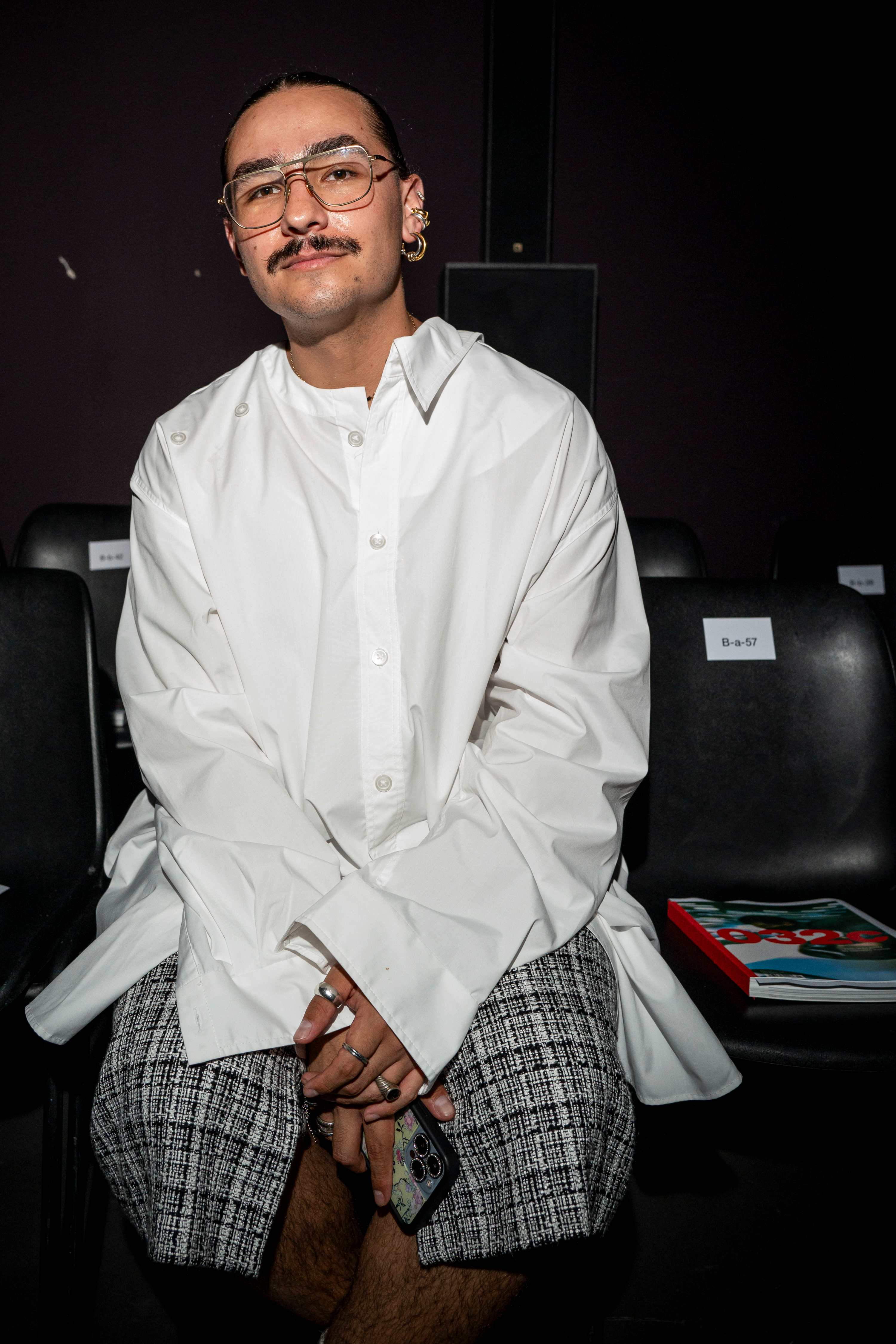
“I didn't consider myself a true writer at the time,” he says. “But I would post something on Instagram, and editors would see it and be like, ‘Can you turn this into a story?’ It was the beginning of this big fashion commentator thing. Pierre M’Pelé, also known as @pam_boy, was doing emoji reviews, Luke of @hautelemode was doing reviews, and you had people like Louis Pisano. We didn’t really know what to call ourselves. I was like, I’m not a critic; I’m a kid. I had too much reverence for the word and the Vanessa [Friedman]s and the Cathy [Horyn]s and the Nicole [Phelps] and the Tim [Blanks]. I was like: I’m not them. But a lot of bloggers had gone into legacy media, and I think Instagram and Twitter, but primarily Instagram, at least in my experience, opened up the floodgates again.”
The Substack Boom
2020
Failing Upwards relaunches as Throwing Fits after Schlossman and Harris exit their partnership with Barstool Sports. It is currently the number one men’s fashion and lifestyle podcast globally, according to Apple.
“When we’re approached by potential partners in a variety of different capacities in which we could work with them, I think that they definitely see the numbers,” said Schlossman. “They definitely see the noise and the chatter. But I think the big thing for me, and I think some recognize it, and sometimes we have to sell it and double down on it, is that like, not only is like the community, well, I hate using that term, but like, we’ll just go with that, ‘the community,’ not only are they engaged, but the enthusiasm is infectious across the board. And I think that starts with James and myself, and why we do what we do. Even though it’s our job, and it pays our rent and shit, we love this stuff.”
Russell is flown out to California to consult for Kanye West’s Yeezy Season 8 collection.
“That’s when I felt like, OK, I can make this something real,” she says of her career.
Lau announces that she’s taking a step back from blogging, citing changes in both her personal life and the digital landscape.
High-fashion Twitter hosts an unofficial Met Gala.
France brings Girls of a Certain Age to Substack.
“When I was on a blog, I did shopping posts five days a week because that’s how I made my living—through affiliate links,” she says. “Having paid subscribers allows me more flexibility in terms of what I post, and I get to show stuff that’s a little more indicative of my taste.”
She also adds: “I always say that Substack gave a generation of writers back their jobs. People who were magazine writers who no longer had any venues for their work. And if they had a decent following as a journalist, they can grow a pretty decent following and make an OK living off of that.”
Medine steps down from Man Repeller following criticism over the company’s handling of issues related to diversity and inclusion. The business rebrands as Repeller, but is shut down shortly after, citing challenges compounded by the pandemic.
Throwing Fits gets its New Yorker piece (though not in print).
Medine quietly launches an eponymous Substack. She later rebrands as The Cereal Aisle.
2021
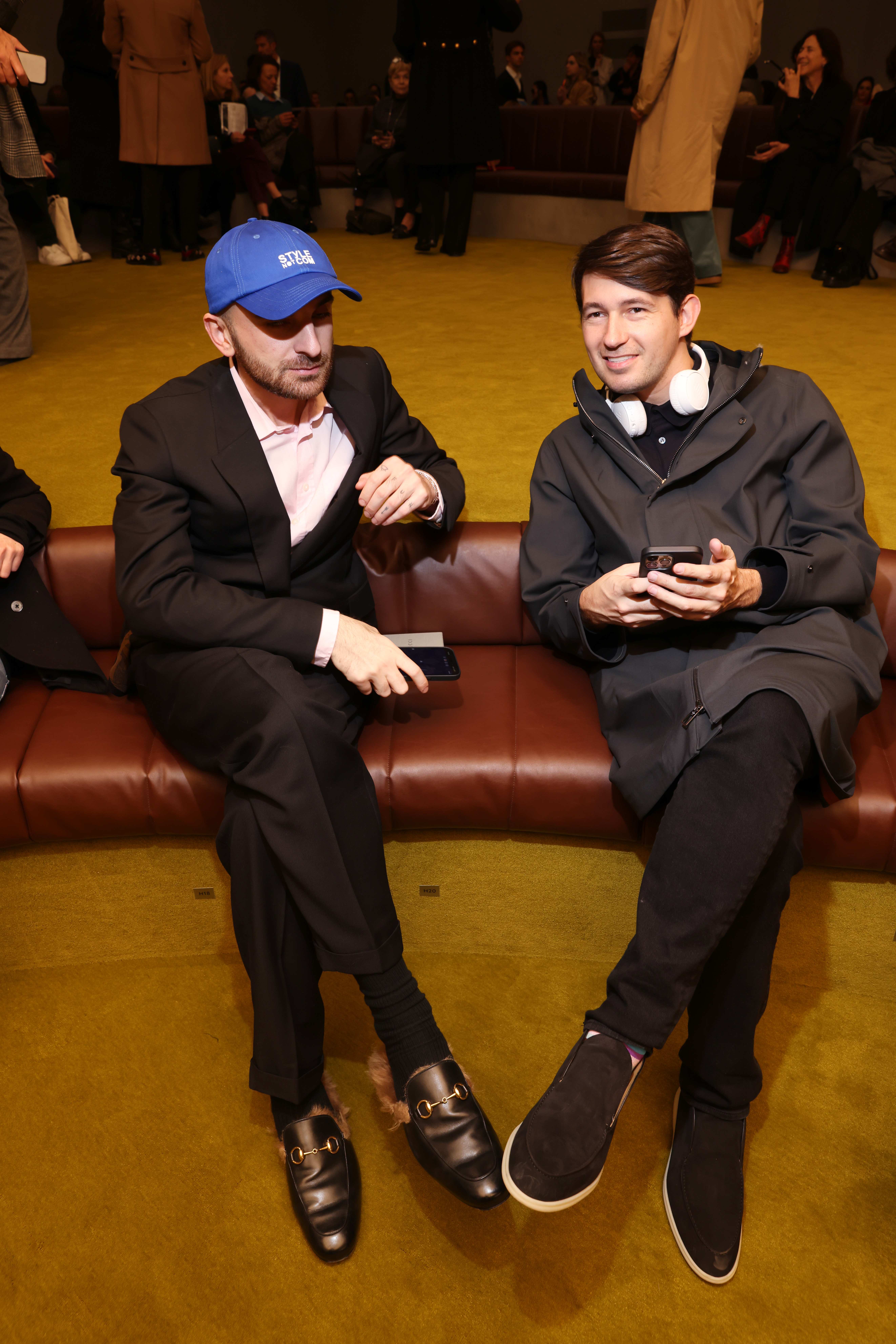
Gvishiani joins Instagram as @stylenotcom, posting white text over a blue background with fashion news and humorous yet reverent commentary.
“He has that fans-eye view,” says Standen. “He says all the things you notice as an editor, but you don’t necessarily report: the venue, the crowd, the sense of anticipation before the first look comes out. That real-time excitement he conveys in his posts is maybe the closest in spirit to the way people felt about Style.com at the time, waiting for images from Chanel or VETEMENTS to post.”
Williams brings A Continuous Lean to Substack.
Becky Malinsky, a former editor at the Wall Street Journal, joins Substack with the newsletter 5 Things You Should Buy.
Jenny Walton, former fashion director of The Sartorialist, joins Substack as Jenny Says Quoi.
Doré brings her personal blog to Substack.
Sicardi is probably never going back.
“What is there left for us in traditional media?” they ask. “I’m so sorry to people that are really trying. But having worked in a traditional media environment and having worked in a newer media environment, I’m being so honest with you, you could not pay me enough to go back into this landscape because there’s no plan of how to evolve in a way that makes sense. At the end of the day, every top-level executive solution is to pivot to video and pray. I’m uninterested. I left when I did because I knew that I could do things better for myself and my own sanity on my own terms. It’s obviously not been as stable, but I get to wake up every day and think about what I want to do and then go do it, and I don’t have to ask a boss for time off or think about my traffic numbers. It’s just better for me.”
In addition to writing, they also now teach classes and offer writing mentorships.
Tashjian Wise sends out the first edition of Opulent Tips, an “invitation-only natural style-email newsletter.”
Pierre A. M’Pelé is named head of editorial content at GQ France.
Rian Phin, an aspiring designer from Southern Florida who started writing for Rookie magazine at around 20, joins TikTok after establishing a presence on Tumblr, Instagram, and YouTube as @thatadult. She gains a following as a critic and theorist with extensive knowledge of fashion history and design, eventually being dubbed a “TikTok Fashion Professor” at the age of 29.
“I started seeing how young men on TikTok were talking about Rick Owens and the Playboy Carti ‘Opium aesthetic,’ like Yohji Yamamoto and Issey Miyake’s work, and I just felt like it was really misogynistic and ahistorical,” says Phin, who now lives in Brooklyn. “It made me feel really uncomfortable because I was like, this isn’t what online fashion culture is supposed to be like. So I started making videos mostly to challenge them and encourage them to think and talk about it in a different way. And then I turned it into teaching people to learn about fashion.”
2022
Garcia-Furtado is hired as senior fashion news editor at Vogue Runway.
Throwing Fits is featured in the New York Times.
Criales-Unzueta is hired at Vogue Runway as a fashion news writer.
“The important thing for me was to maintain the ability to report on the internet—what queer people and weirdos on the internet are still doing, or are into—and preserve the way we speak,” he says. “The way I speak on the internet is still the way I write. It’s a little more cleaned up and Vogue-ified, but that also has to do with me growing up and having a really good editor.”
2023
Lauren Sherman, a former writer and editor at both Style.com and Business of Fashion, launches Fashion People, a newsletter with the upstart boutique media outlet Puck.
Gevinson, who has built a successful career as an actor at this point, joins Substack as TGmail.
“When I used to write a blog (takes drag of cigarette…dips head back…exhales slowly) I didn’t always see what I did as writing or photography because the internet was so new and everything online seemed to me like a less serious, too-novel version of art-making that came before,” she writes in her first post. “I think I was wrong—I wrote and took photos, even every day for some stretches—but I also think not seeing these hobbies as Writing or Photography is part of why I was able to do them. It took some pressure off.”
2024
Russell lands a Harper’s Bazaar Australia digital cover, which dubs her “digital fashion’s purveyor of taste.” Working as a professional stylist, she also consults on Tems’s Met Gala look.
“Every day, I get messages saying, ‘I was this close to giving up on fashion,’” she says. “A lot of Black women in Australia said it was uplifting.”
Medine writes in one of her newsletters: “It seemed like traditional fashion blogging died completely during the pandemic, even though it had been suffocating for years on account of the rising popularity of short-form, bite-sized, conveniently instant stories thanks to Instagram. In that transition, we lost a lot of originality to algorithmic sameness. I think what newsletters have given their audiences is a return to that sense of originality.”
Schlossman and Harris bring Throwing Fits to Substack from Patreon.
“I’m always thankful that I just nutted up and joined Blogspot when I did,” says Schlossman. “Because if it wasn’t for that, like, we’re not having this conversation now, and Lord knows what I’m doing for a living, or if I’m dead. I literally can’t do anything else. My brain has one speed, and that speed is cool clothes. And all the other shit that comes with it when we talk about cool clothes.”
By now, Phin says high-fashion Twitter has mostly dissolved. “It was really oriented around community and fellowship, which is what I think a lot of online fashion spaces used to be like—lonely people, gay people, people of color, marginalized people adjacently interested in high-fashion and wanting to connect. It feels kind of dead now, to be honest. That’s not to say you can’t still be a part of an online community, but I think people see it as less of an online community and more of a vehicle to enter the industry, and it’s not as fun. A lot of people have also grown up and grown out of it. So maybe it’s just past its prime.”
Standen is currently dean of the School of Fashion at the Savannah College of Art and Design.
Oh is still at Vogue: “I’m just a grumpy, middle-aged blogger to be shipped off to the retirement home for washed-up bloggers.”
Gvishiani is being recognized on planes, despite never showing his face on Instagram: “I was on an ITA Airways flight from Paris to Milan, and this flight attendant looked at me and said, ‘I love what you do.’ I was not wearing my @stylenotcom cap, so I was a bit confused. I was like, ‘What do you mean?’”
Lau, who is now the digital editorial director of System magazine in London, would join Substack, but she’s got a bit too much on her plate. “It’d feel like going back to my roots, and I miss writing as an exercise as well,” she says. “Obviously, I’ve written for different publications over the years, but you kind of end up losing your own voice a bit, and you have to sacrifice some things in order to be on other people’s platforms. So yeah, I’d love to. Just give me an extra me.”
Criales-Unzueta is promoted to fashion news editor at Vogue Runway.
Gevinson has no regrets: “When we look back now, we can see what was really special about it and what we took for granted, especially in terms of how much everything was about to change regarding technology and social media,” she says. “At the time, sitting at a computer felt so cold and new and digital and not romantic. I could not have anticipated that there was actually an intimacy to blogging and these relationships in the fashion world that were opening up before me and the sense of community.”
By
Emilia Petrarca
Images/Photos Courtesy of
Tavi Gevinson and Laia Garcia (Pop Zine)