Earth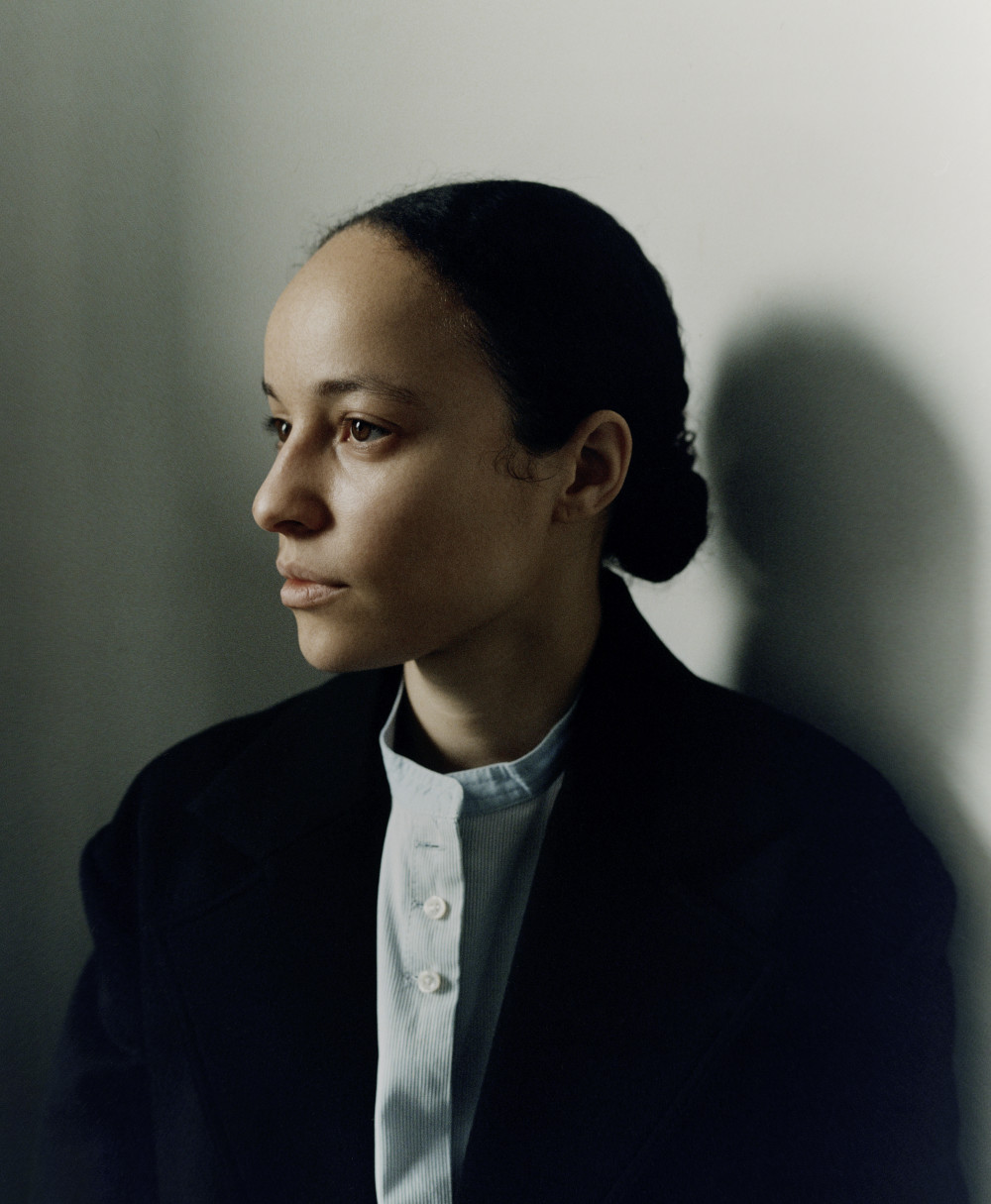 Tones
Tones
Tones
GRACEWALESBONNER
AND
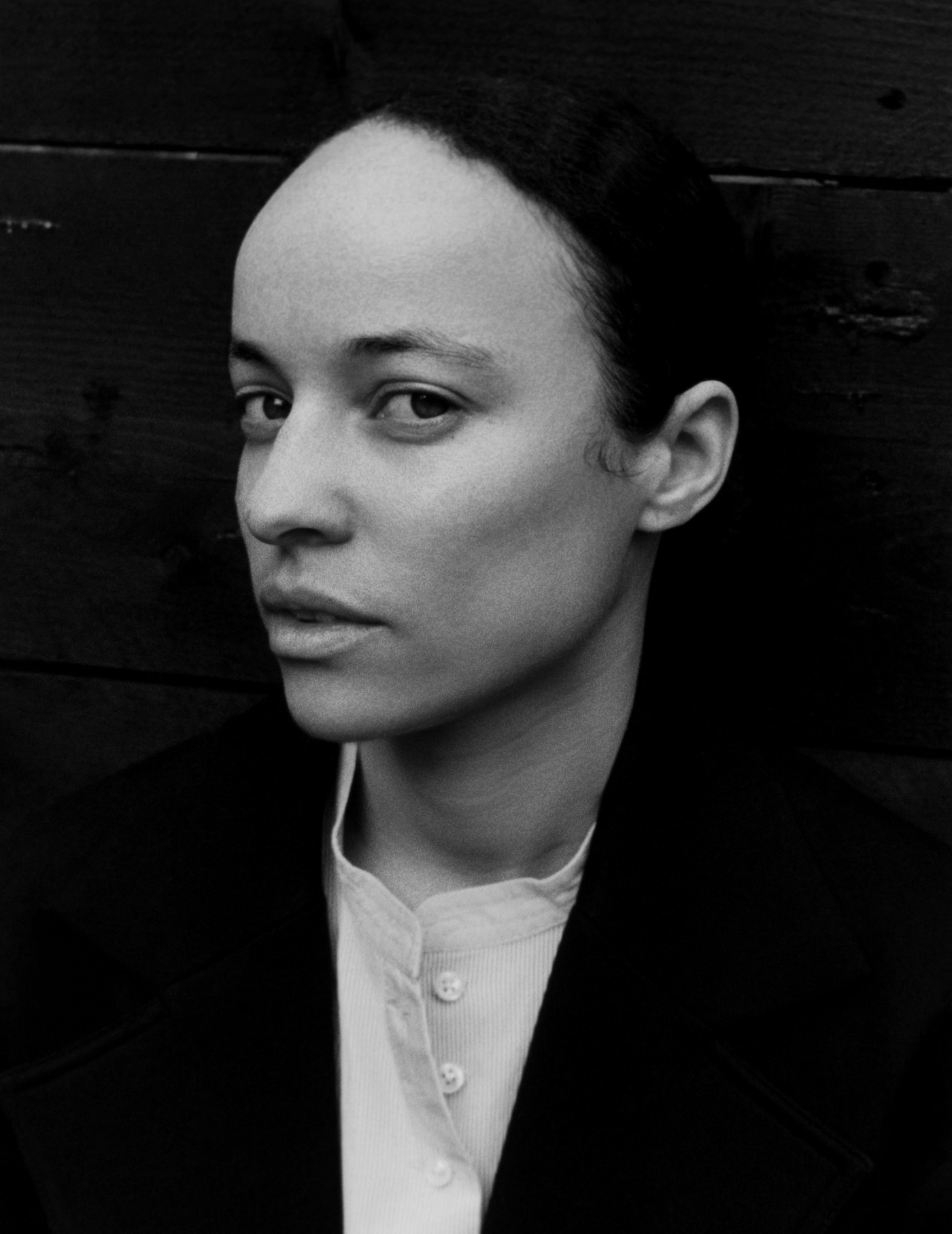
MARLONJAMES
IN CONVERSATION
AND
“I keep thinking we’ve met before,” said Marlon James at the beginning of his call with Grace Wales Bonner. “It’s been a few years in the making, this conversation,” she agreed. A long-awaited moment somehow always has the quality of being right on time, and for two artists to find each other across continents and via video-conferencing software is one of those ordinary, precious coincidings—the inevitability of chance.
With her award-winning and critically acclaimed collections, Wales Bonner has distinguished herself as a fashion designer who understands that time is its own material. Her consideration of archival elements and intensive research, paired with the impeccable tailoring her ready-to-wear has become known for, is what lends each collection its sense of being part of something much larger than itself. In late January Wales Bonner presented the Fall/Winter 2021 show “Black Sunlight,” and a video collaboration with Jeano Edwards shot in Jamaica and London. These pieces were described as being a part of a trilogy: a conclusive chapter connecting the threads between heritable narratives and personal histories, her inspirations and tributes unfolding into a multiplicity of stories. “I do create two collections a year,” she said to James at one point, on top of her collaborations with brands such as adidas and Dior, “But I don’t feel the urgency to create something completely new. There should be a strong continuity in terms of exploration.”
Discovery is one of the many themes that connect Wales Bonner and James; research is another. The author of four novels, including A Brief History of Seven Killings, which won the 2015 Man Booker Prize, James invokes legacies of religion, mythology, and history in his work—they are fantasies that become reality in our readings, his writing a collection of what stories the past can tell and what futures can be imagined.
As their precise yet sprawling discussion moved between the potential of a work in progress, and the power that transforms clothing into style, the two artists continued to find much in common between their mediums. They both consider themselves close readers of characters, and students of movement; they are both drawn to the symbols of fine tailoring, and attuned to the sounds of their respective atmospheres. The following is a condensed and edited version of what is, no doubt, the first of many talks to come.
Marlon James
Do you remember the first spark or inspiration that drew you to fashion, to dressing, to clothes?
Grace Wales Bonner
It took me a long time to get to clothes, really. I was interested in identity, representation, image-making, portraiture—seeing myself or my family represented. I remember having very emotional encounters with certain images, certain faces, I would just feel a connection to.
As a child my mum was very encouraging of my siblings’ individuality, of us developing our own way of expressing ourselves also through clothing. This idea of freedom of self-expression was definitely nurtured as a child. I think what I kind of resisted when I was a teenager was what I felt were containers—for how I would need to dress or what the expectation of me at certain ages was.
You’re the first person I’ve come across who understands what I mean when I say research is an art too, because I write historical novels. Have you ever found yourself going in a direction you never would have anticipated because of the research?
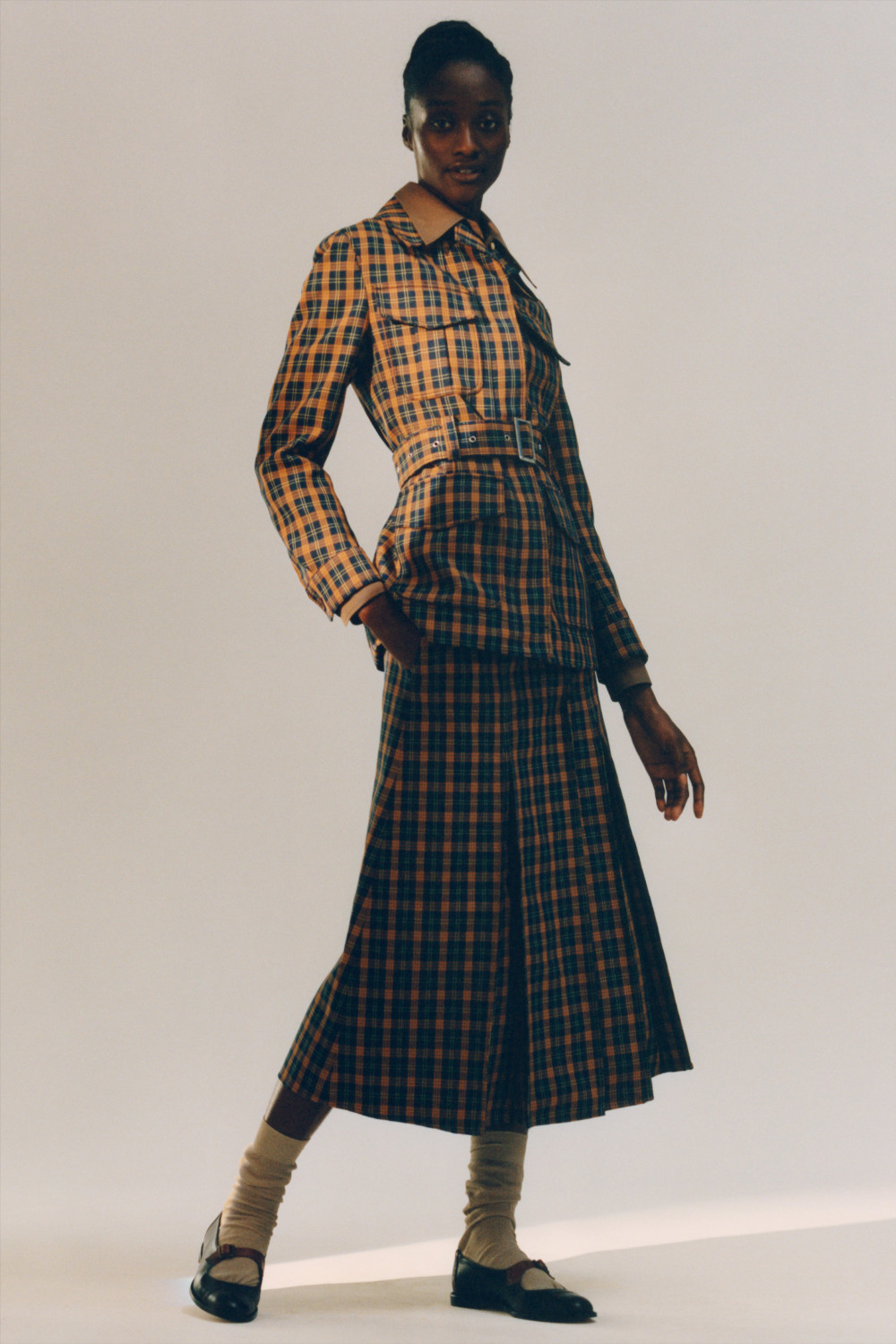
I think I reveal and discover more, and things become more complicated the more you look into them. There’s more synergy in some ways, but it’s not about resolving something into a singular narrative or a singular way of looking. It’s always about a multiplicity of perspectives.
Is there any sort of art or music or inspiration that you find yourself returning to, if not always, more often than not?
I think Kerry James Marshall’s work, but also his approach to introducing himself into a lineage of mastery. His recognition of the history of portraiture, and his approach to creating space for himself in that institution, is very inspirational to me.
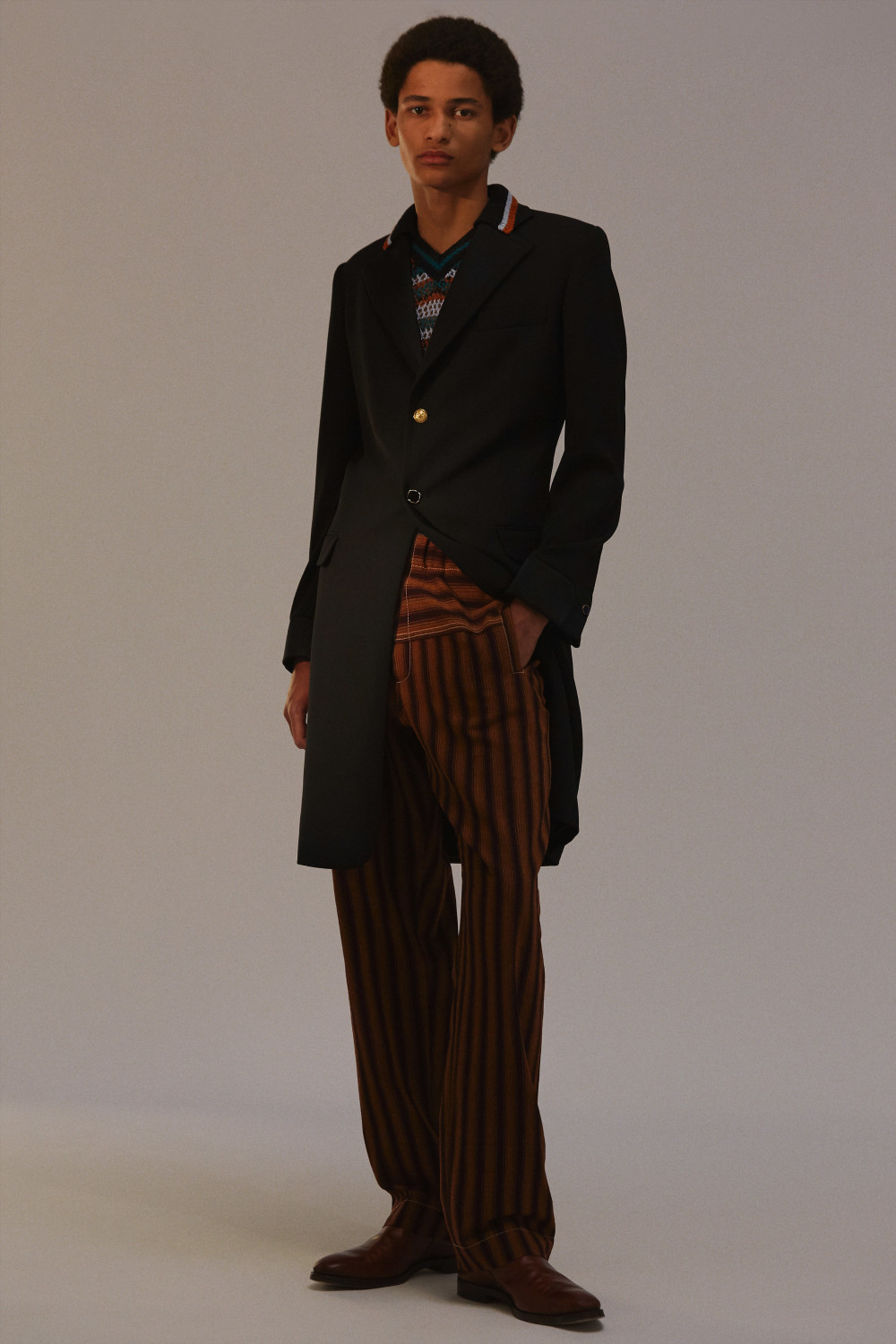
So it’s sort of like me and Toni Morrison. I’m not always reading her, but one of her books is almost always on my desk—I don’t know how to describe it, it’s like I kinda need my heroes nearby.
Totally. Even the bookshelf being a starting point—Ben Okri is another person I would similarly think about.
I love him. I love The Famished Road. How do you know when it’s time to stop researching and start working? I sure as hell don’t know.
I don’t think there’s ever a time to stop researching.
So, not the thing to tell me, but go on.
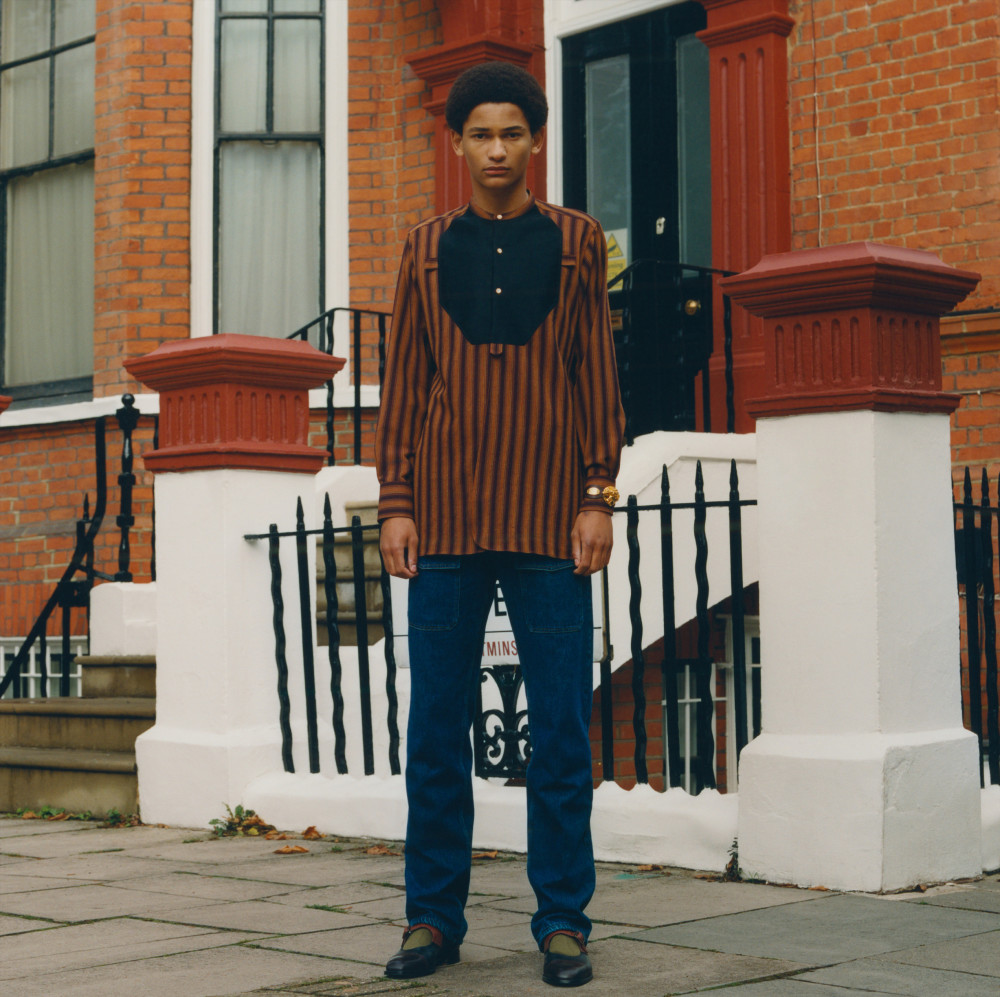
I would say that the research practice is ongoing, and the fact that I work in fashion is helpful: there are always really specific cycles. It has a certain predetermined rhythm that I like to be a part of. Within my own artist practice, I want to create more space in my response to research, and create the freedom to approach it with a different sense of temporality.
Fashion is very cyclical, and I also need to have different spaces to be able to operate within. I have other outlets, such as working on an exhibition project, which would be two or three years of development and research.
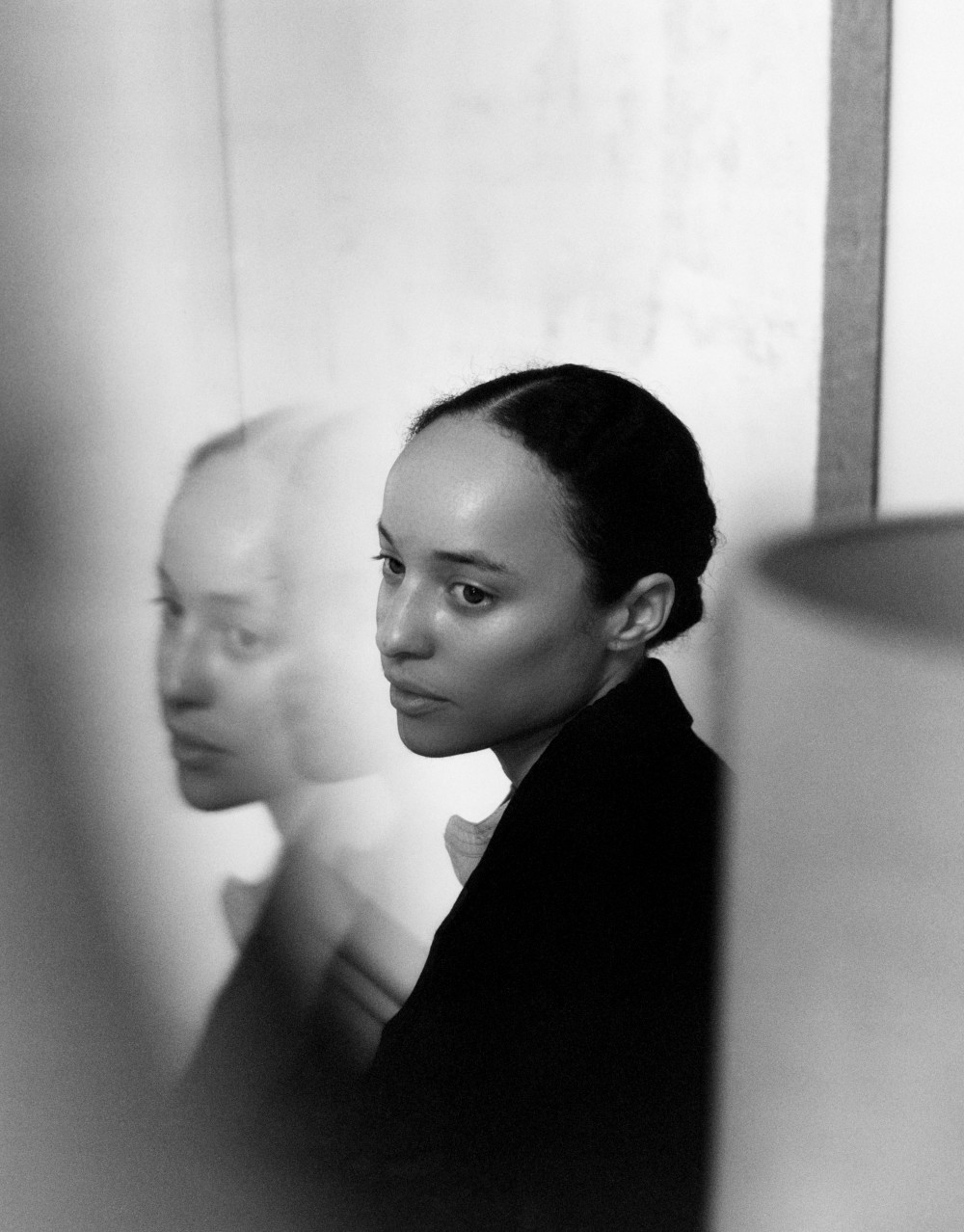
One of my secrets is that any time I needed to solve a fashion crisis or didn’t know what to wear, I would just watch 15 minutes of Rockers. Is there a film that has that sort of influence on you?
Definitely—the last collection I did was called “Essence,” and it was about me reducing style or my language to the key elements of a wardrobe. Rockers was definitely a reference again and again, it’s this idea of invention. The pieces on their own aren’t particularly amazing, but it’s actually the way you wear something that would inform how people would cut clothes in the future; that confidence really can transform and carry.
It’s probably not an either/or, but do you think clothes can give you confidence, or you should have it before you approach the clothes?
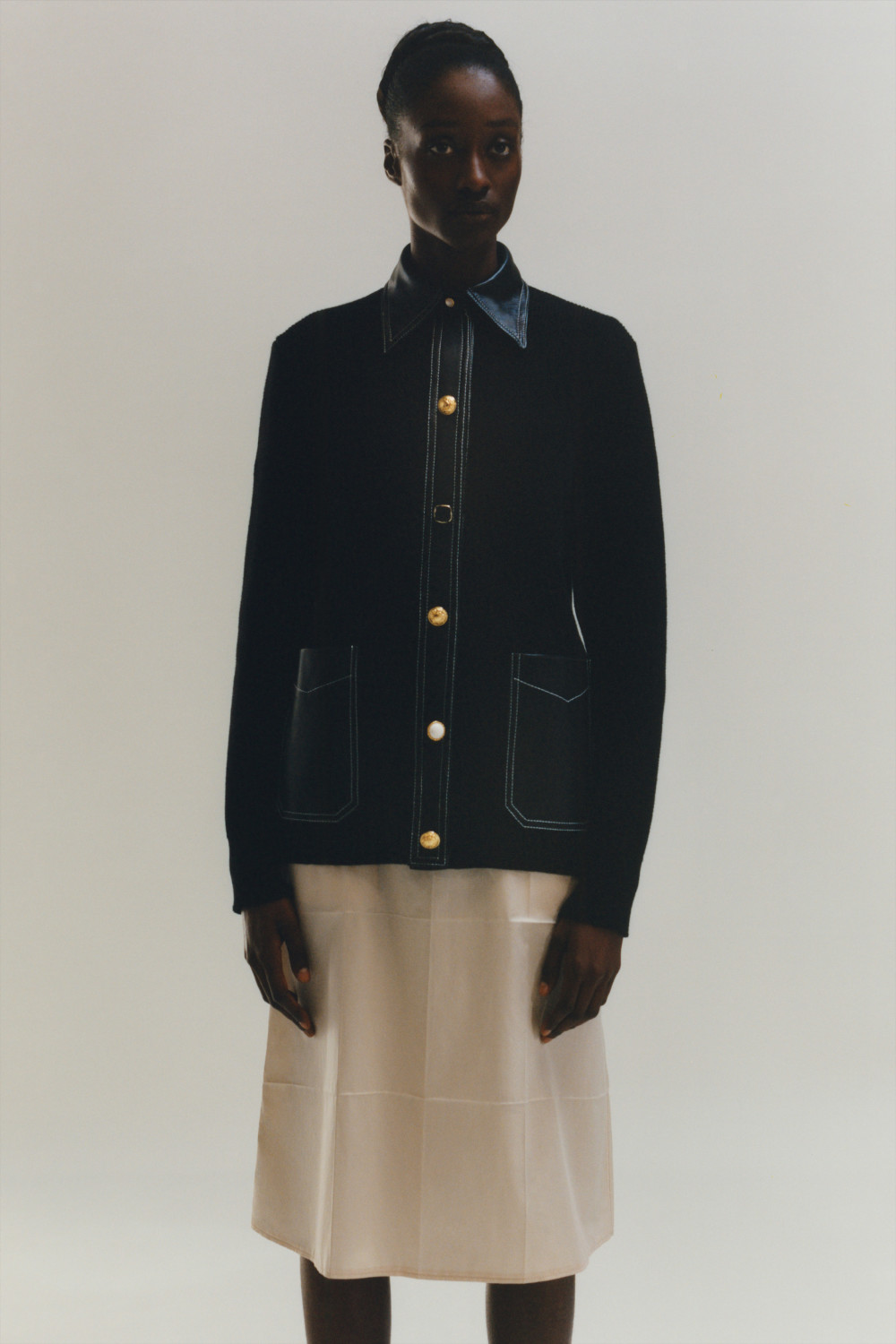
Yes, I think it’s about self-possession, and also the transformational quality of clothing. Particularly with tailoring, I remember some of the models at my shows, I would put them in a suit, and they would carry themselves completely differently, and feel like a prince. That’s quite beautiful to see, the kind of transformation…or not even a transformation, the revealing of who you actually are.
What do you remember most about your favorite piece of clothing when you’re not wearing it?
I think how it feels on my skin—tactility, intimacy. I’m really interested in the sense of soulful dressing or tailoring; it’s so intimate to be dressing someone else with something that’s so close to people’s skin. It’s like having an emotional relationship with them.
Yeah, I don’t want to say “false dichotomy” because that sounds kind of lofty, but Americans like to think that with fashion you have to choose between elegance and comfort, and that results in a lot of people wearing velour jumpsuits. But that’s a misunderstanding of what fashion can do.
I think so, because I’m always interested in elegance and a sense of timeless beauty, evaluating the everyday so that it can be comfortable and worn with ease. I definitely don’t think they’re independent options.
I was looking at some of the early jackets in the Dior archives, and I had such an emotional reaction to them: they were very pure and essential. Everything was exactly what you needed, but you could really feel the craft and the emotion of who made it. And what I really liked was that you couldn’t place when it came from. You could’ve found it in a market a hundred years ago or today.
In terms of my own collection, the “Ezekiel” collection is one of my favorites; it was looking at Haile Selassie, ceremonial wardrobes, the idea of being a savior. I tried to reduce that to these ivory tailored suits, and I feel they were pure and essential in terms of proportions. Slight adjustments that bring it into my world and my rhythms. That’s an example of something where it’s only the elements that are essential, I feel.
Do you notice a difference between learning from Dior and, say, working with adidas?
I’m drawn to brands where they’ve refined a specific craft. I think in a way I’m interested in the archive and this idea of originals—of reinventing something essential. The approach to working with brands is about the intersection of our histories. Where is Dior part of what I am looking to explore? Where is adidas in relation to the community or culture that I’m interested in?
In my last collection, I was looking at films like Rockers, looking at Jamaica at a certain time; before that, I was looking at the British Caribbean community from a similar time and comparing the difference in color palettes, or what you’d wear in certain climates, how you might want to communicate your identify even more loudly in the context than you might in Jamaica. There’s often a sense of a character study and a wardrobe study—a continued conversation, continued language.
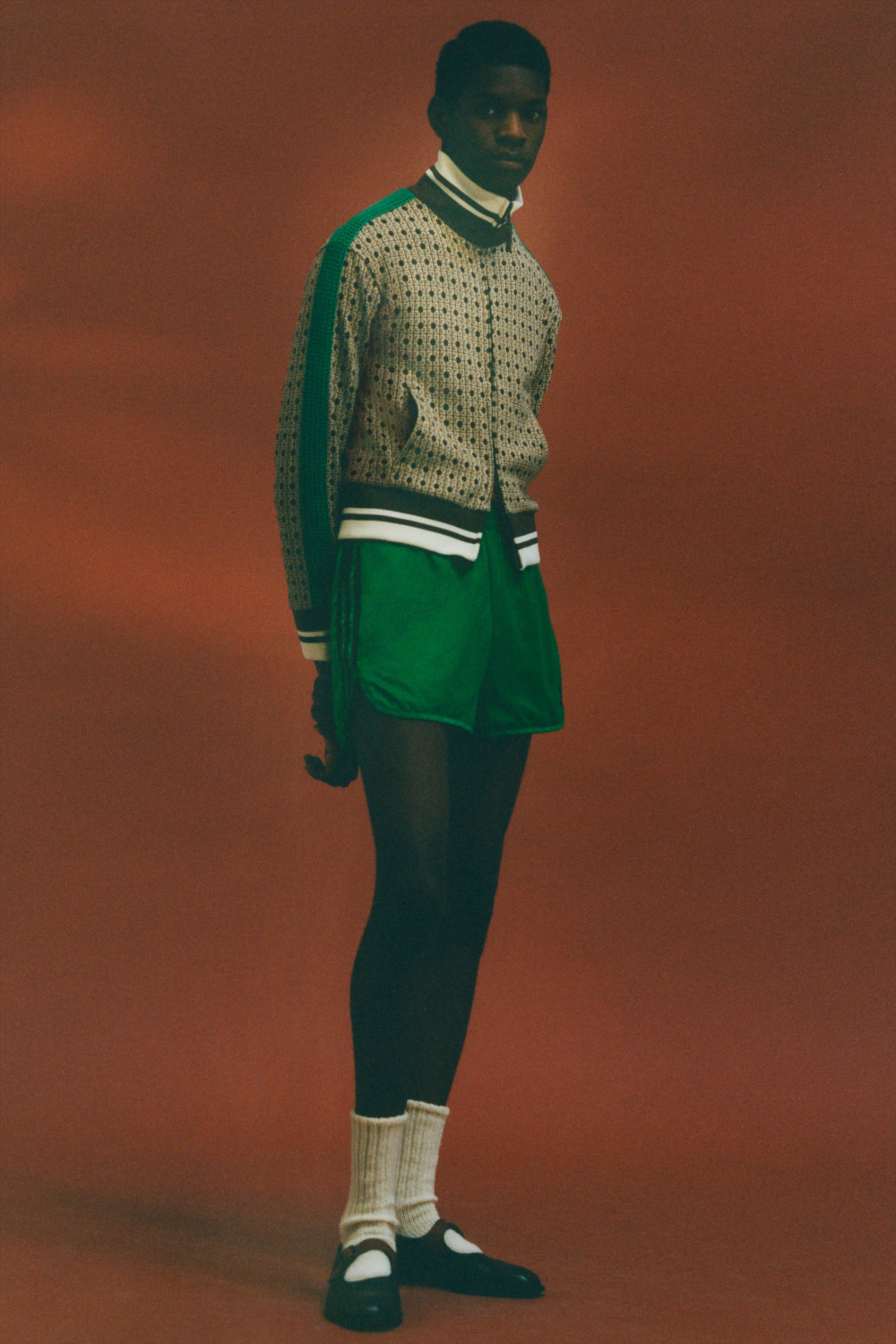
I was going to ask—everyone has referenced gender and your clothes. Do you think it’s about playing with gender norms, or is it just some kind of a fluidity?
I think it’s probably a sense of fluidity in the same way that it’s also a spectrum of representation, or a spectrum of Blackness. Within them there’s so many different possibilities, and I think it’s about showing the infinite range. I want to be reinforcing and repeating the images I’m creating to make them more familiar, to make different ways of viewing widely recognizable.
When I started in fashion, I felt there was quite a specific way Black culture was represented, or what a specific model or look was signifying. I wanted to show, historically, that there are so many examples of elegance in Black culture.
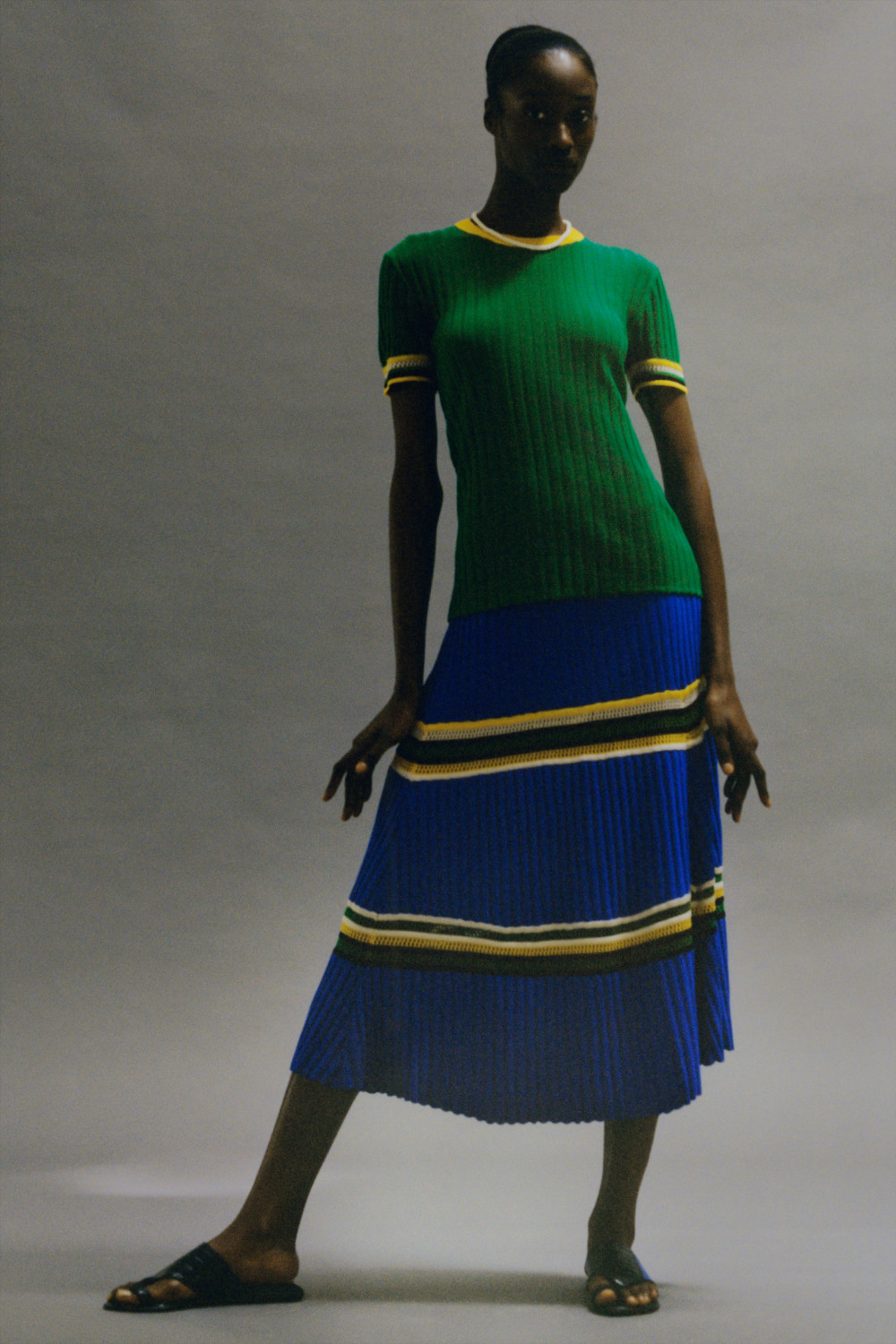
What struck me was looking at a lot of your clothes and I saw why people talk about gender and so on. But I also saw something you see in Caribbean and African culture, particularly on men: clean lines, gracefulness, elegance. I don’t know if you’ve seen in Jamaican dancehall when men are dancing together. It’s so delicate, almost androgynous. Of course Jamaican men will be horrified that I said that, but when I see them dancing, they move with grace. The clothes looked like they matched what is actually a kind of male grace, as opposed to a gender norm.
I think so. It’s also probably a vision of masculinity that I find familiar, or maybe idealized.
I was looking at your collection, “Lovers Rock,” and also I saw the film Lovers Rock—have you seen it?
Yes, it was kind of a coincidence; I did my “Lovers Rock” show in January last year, then the Steve McQueen film came out close to that collection being in stores. It was quite interesting seeing the film. There’s definitely lots of things that I was looking at in developing that collection—I could see that there’s actually a very small archive of imagery from that time, so they’re quite specific references that you can really read in the film. I could recognize photographs, pictures, characters.
I was thinking about the origins of dancehall, but looking at Lovers Rock, I think it was also what people were creating in the UK as a reflection of what they were seeing in Jamaica. I was thinking about the evolution of sound and homegrown talent, I think what I found interesting is the kind of sentimentality of it, the romanticism, the tenderness of what it translates.
That world specifically, that feeling of a balanced representation between men and women was interesting to me—it felt like there was a balance or an introduction to an idea that was about unity, and not necessarily masculinity dominating the production.
I was reading Hilton Als’ profile of you in The New Yorker, and he talks about the correctness of John Lewis’ suits as he’s being battered by people in Selma—a lot of people, and by people I mean some white people, don’t understand when I say you gotta understand elegance is Black rebellion. The other thing that struck me about Lovers Rock was how great everybody looked, but it’s not just a matter of looking good.
Beauty is also a kind of resistance. I think what I find quite interesting is this idea of invention, in terms of what makes style. Clothing can come from all over the world, but the way things are put together—that’s what creates style, invention brings it into existence. To me it kind of relates to musical traditions as well. The elements of it, and then the improvisation within it, that’s the real creative act.
I see myself as a researcher. I’d say that’s a guiding practice I have, research being artistic in its own right and not necessarily needing to have an outcome. But then, also from that point, thinking about how to communicate that spirit through sound, or literature, or experience, or clothing. My process is very much about understanding a world or trying to understand a character through multiple mediums and textures.
A lot of the time it comes from recalling fragments of literature, of memories that are slightly disjointed. I have to be quite immersed in a world to understand how to visually communicate that character, how you can create silhouettes that feel authentic to that world, how to create a wardrobe that reflects that world.
What colors do you see yourself going back to?
Rust is a color I go back to quite a lot. Ivory, brown—
All the earth tones.
Quiet earth tones. Then also jewel tones I quite like as well. I’m always interested in off-white, the amount of different tones within that.
I’m always scared of white. I feel by the time it will get home it’ll be red; I think I’m gonna be somewhere in Jamaica, where there’s red dirt.
That’s the rust, I guess.
Who are you listening to these days?
I’ve started this new year listening to a lot of piano and Paul Robeson. Also ragtime piano—it’s quite a weird thing, you’re suddenly just into it and it has this slightly theatrical, operatic quality, which has been really nice. What have you been listening to?
I’ve been listening to a lot of Thelonious Monk, a lot of PJ Harvey. Then I stopped because her lyrics kept appearing in my books which is really weird. It’s set in medieval Africa. Nobody would say, “It’s hard walking in a dress / It’s not easy.”
I’m gonna write that down, it sounds amazing. There’s an album I highly recommend, by Joe Henderson and Alice Coltrane, called Elements. I’ve been listening to Alice Coltrane the most during this whole plague business. You know Laraaji?
Yeah, I was listening to Ambient 3: Day of Radiance, which is Laraaji!
I’ve worked on a few things with Laraaji. He’s amazing. He lives in Harlem, in an all-orange apartment.
Shit. I just did my hallway orange. I feel like a kindred spirit.
Marlon James won the 2015 Man Booker Prize for his novel A Brief History of Seven Killings. He is currently at work on the second installment in his Dark Star trilogy of fantasy novels, Moon Witch, Spider King.
Clothing: Wales Bonner
Production: Ella Moore
Date: April 1st, 2021